On the 15th of December 2023, a translator working on one of Duolingo's three biggest language courses received an email ending the relationship. They posted a screenshot to Reddit under the handle No_Comb_4582, together with the reason the company had supplied: AI could now generate the content and the translations, the alternative translations, "and pretty much anything else translators did." Duolingo confirmed the numbers to Bloomberg and CNN a few weeks later. Around ten percent of its contractors, most of them the translators and writers who built the actual lessons, were gone, offboarded by email ten days before Christmas. The company assured CNN it was "not swapping the expertise of human experts for AI," which would have been easier to believe if the email had not just explained, in writing, that it was.
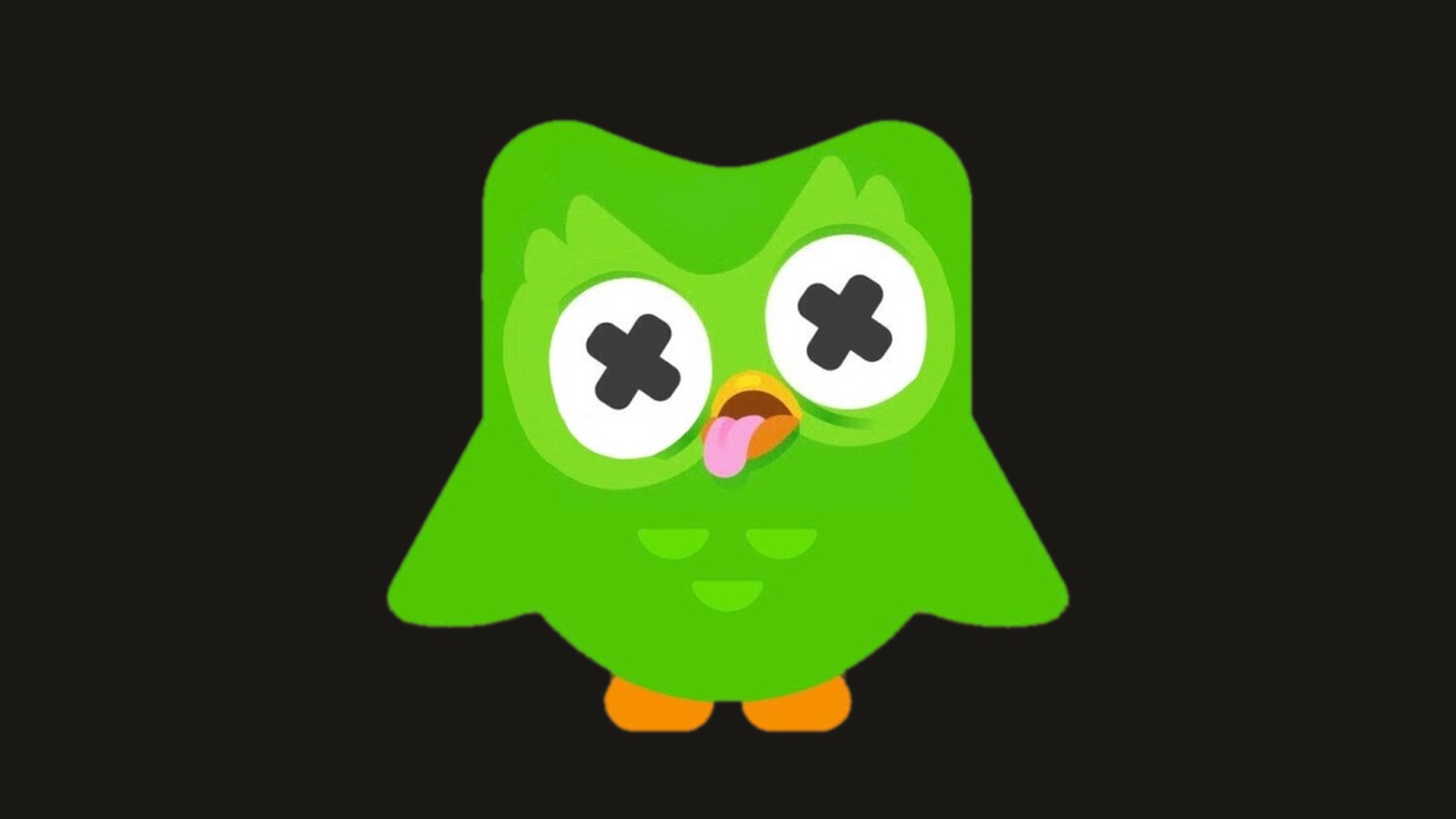
Fourteen months later, Duolingo held a funeral. On the 11th of February 2025 the company announced that Duo, the green owl that has fronted the app since 2011, was dead. The app icon changed to a corpse, tongue out, crosses for eyes. A video established the cause of death as a Tesla Cybertruck, which Duo himself later admitted was "mainly there for dramatic effect, and perhaps some social commentary." Luis von Ahn, the chief executive, read a eulogy on TikTok, and Dua Lipa, the owl's canonical crush, posted "'Til death duo part." The World Health Organization publicly speculated about the cause of death, a sentence I have now typed and cannot take back. Users learned the owl could be resurrected if the community earned fifty billion XP by doing lessons, so the community did lessons, and on the 24th of February the bird rose again. "Faking my death was the test," the account explained, "and you all passed." Those two weeks generated 1.7 billion social impressions, by the company's own count roughly double the conversation around any single Super Bowl ad that year.
Two deaths at one company, fourteen months apart. The fictional death got the murder investigation and the pop-star grief, then a resurrection. The real ones got a form email and a Reddit thread. That gap in ceremony is the clearest picture anyone has produced of how the AI transition actually lands at a consumer company, and of the instrument that makes it survivable: the streak. Duolingo has run the decade's cleanest experiment on whether customers will punish a company for replacing its workers with software. The results are in, and they are about you.
The memo arrived ten weeks after the resurrection. On the 28th of April 2025, von Ahn posted an internal email to LinkedIn declaring Duolingo an "AI-first" company. It would "gradually stop using contractors to do work that AI can handle." Teams could only grow their headcount if they "cannot automate more of their work," and AI use would count in hiring and in performance reviews. The memo's most honest phrase was its promise to move with urgency and accept "occasional small hits on quality" rather than miss the moment. The machines had already churned out 148 new language courses in around a year, more than doubling the catalogue. Around the same time, von Ahn told a podcast that AI would make a better teacher than a human, with schools kept around mostly to mind the children.
The backlash needed only hours, and the goodbye posts all measured their sacrifice in the same currency. People announced they were deleting the app and named the streaks they were abandoning to do it, the way a monk mentions what he gave up for the faith. On the 17th of May, Duolingo wiped its TikTok and Instagram accounts, which had shed more than 400,000 followers in a few weeks, and replaced everything with cryptic messages. On the 24th, von Ahn returned to LinkedIn to clarify that he did "not see AI as replacing what our employees do."
Then nothing happened. That August, Duolingo beat its revenue estimates and the stock jumped nearly thirty percent in a day. TechCrunch ran the definitive headline: the backlash "didn't even matter." On the earnings call, von Ahn located the problem in his phrasing rather than his plan, saying he had "said some stuff about AI" without enough context. The course never changed. What changed was the posting schedule: in August the company said it had paused its edgy social content to repair sentiment, and by November it was telling shareholders that growth had slowed partly because the posts had not been "unhinged" enough, and that the unhinged content was coming back. By then, more than fifty million people were opening the app every day.
A subscription can be cancelled in two taps. A streak has to be killed. More than ten million Duolingo users currently hold a streak of a year or longer, a retention figure so far outside industry norms that when Simon Hade, the Space Ape Games co-founder now working with Duolingo, quoted it to a London industry crowd in January, he noted that getting five percent of daily users to return for a single week is normally where studios open the champagne. Duolingo has spent a decade engineering that number. It sells streak freezes so that a missed day costs gems instead of the streak, and lets you equip two at a time, because their research showed forgiveness improves attendance. There are Double or Nothing wagers where you bet gems on your own consistency. The death campaign in February was the same machinery wearing a costume. The announcement of Duo's passing noted that he "probably died waiting for you to do your lesson," and the resurrection required the mourners to do those lessons. Grief, monetized at the daily-active-user level.
The streak is loss aversion with a deadline attached, and the deadline is midnight, tonight and every night after. Any protest against the company had to be paid for in days, and the days were the users' own, hoarded one at a time for years. The genius of the mechanic is that the sunk cost belongs to the customer while the moat belongs to the firm. Anyone who named their streak in a goodbye post was describing, whether they meant to or not, the reason most of the people reading it would stay.
In September 2025, Duolingo gave the habit a CV. At Duocon, the company announced that the Duolingo Score, its 0-to-160 proficiency number, could be embedded in the Languages section of a LinkedIn profile, where it updates on its own as you practise. "My favorite part," von Ahn wrote on his own LinkedIn page, was exactly that automatic updating, and his own French, he shared, is a 60. Keep that number nearby. The Score maps onto the Common European Framework of Reference (CEFR), the Council of Europe scale that has graded language ability across the continent since 2001, and the company's shareholder letter later specified that 129 "is the level at which learners can get a knowledge job in that language." A firm now publishes the exact number at which a language earns you employment, and it is the same firm that emailed its translators, the people whose language skills were the job, to say the machines had it from here.
The users never punished Duolingo. The market eventually did, for the opposite reason. The stock closed at an all-time high of $540.68 on the 14th of May 2025, sixteen days after the memo, which tells you what investors thought of the contractors. On the 5th of November the company announced its fifty-million-user milestone; the next day the shares had their worst session on record, down twenty-five percent on soft guidance. In late February 2026, Duolingo reported the first billion-dollar revenue year in its history, and the stock fell by more than a fifth the following morning, at that point roughly eighty percent below the May peak. The sellers had looked at ChatGPT, which will patiently conjugate French verbs with you for nothing, and applied Duolingo's own December logic back onto Duolingo: if a model can produce the content, the translations, the alternative translations and pretty much everything else, the case for the owl as middleman needs re-arguing. The company that moved first on replacing language workers is now priced as the next language worker in line.
Von Ahn has spent 2026 taking his own memo apart. In April he dropped AI use from performance reviews, telling a podcast, "I'm not going to force you to do that." AI code, he now concedes, is hard to debug; AI-generated stories come back as nonsense often enough that the time saved on the happy path drains away on the unhappy one. Through all of it he has repeated one line like a rosary: "we've never done a layoff here." The sentence survives fact-checking on a technicality: the translators were contractors, and contractors are not laid off. They are offboarded, a word that implies a ship, and a gangway down which a person walks in an orderly fashion. Meanwhile the gross margin keeps widening on what the latest shareholder letter calls "reductions in per-unit AI costs," and somewhere inside the phrase per-unit is everything the memo was ever about.
That same letter, from May, notes that user growth looks slower this year partly because the company is lapping the fake death of the owl, which juiced last year's numbers. The resurrection is now a comparable, a line in the books that analysts adjust for. The real departures never made the books at all; contract costs simply appear one year and not the next. On the fan-run hall of fame at duome.eu, the longest active streaks now run past five thousand days, which puts their start around 2012, the year the app opened to the public. Those streaks have outlasted the December email and the April memo, the fake funeral in between, and eighty percent of the share price. Tonight, a few minutes before midnight, each of them will tick up by one.