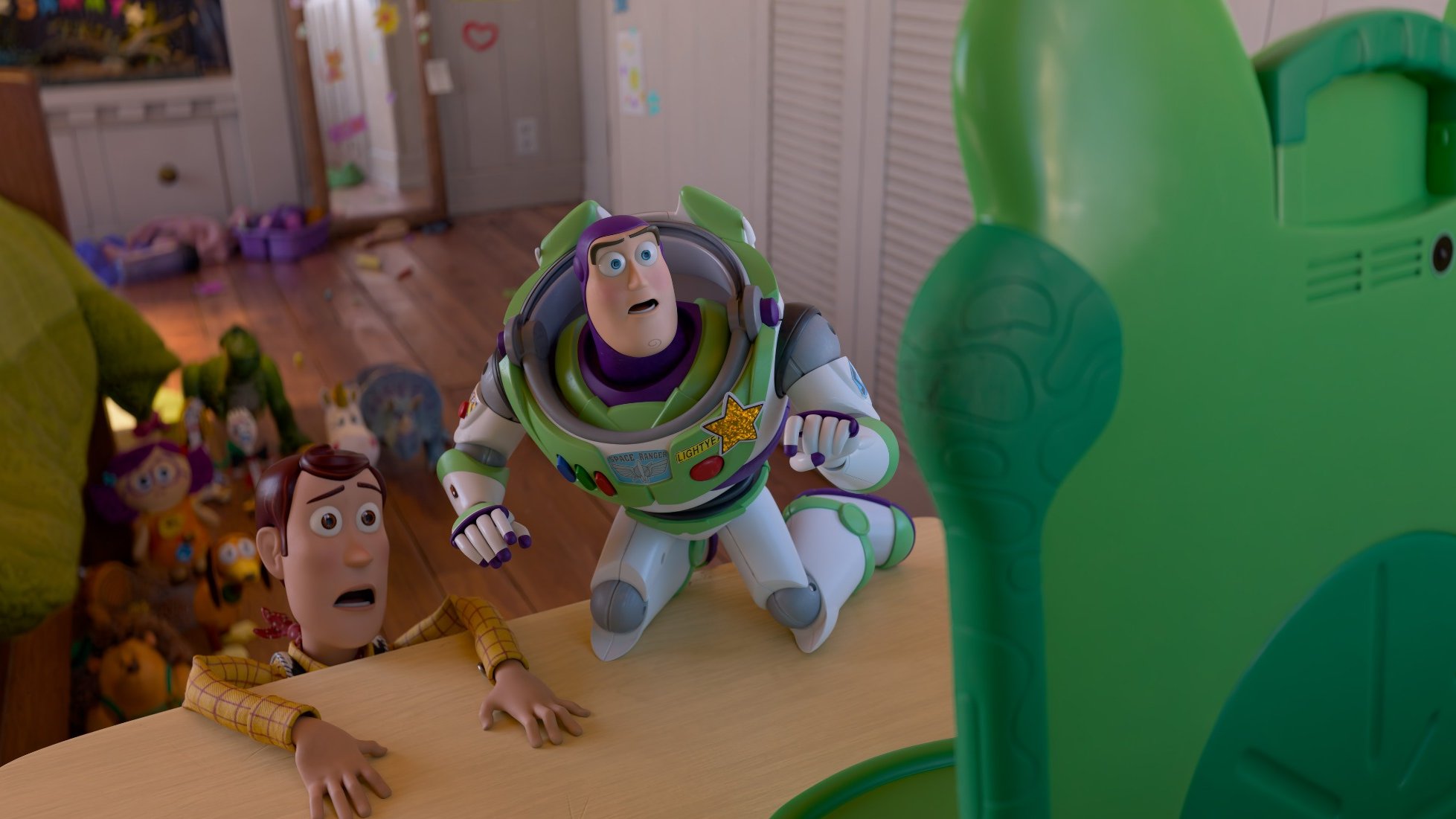
This Friday, Disney and Pixar release 'Toy Story 5', in which Woody comes out of the retirement he earned at the close of 'Toy Story 4' to fight a tablet. The tablet is called Lilypad, a cheerful frog-shaped device that offers to optimise everyone's fun and would much rather Bonnie looked at her than at the toys. Woody turns up to stop her with a bald patch and a small paunch, which means Tom Hanks now voices a balding cowboy, and which the studio spent part of an interview this week defending after the bald spot went viral and a good number of grown adults turned protective of a wooden doll. Sharpie, the marker company, smelled an opportunity and offered to colour it back in.
The ageing is the real tell, though not the one the studio intends. Woody is thinning on top and going soft in the middle because, as director Andrew Stanton puts it, the toys move through time the way everyone else does. That is sweet, and it is also a sales document. The first 'Toy Story' arrived in 1995, which puts its original audience somewhere in its late thirties and forties now, with children of its own and a hairline of its own to monitor. Pixar has quietly aged the cowboy into the precise person buying the ticket. The pot belly is your pot belly.
What Woody is fighting for is the proposition that children still play with physical things. The premise of the film is that they have stopped, that Bonnie's attention has wandered off to a screen, and that the toys' entire reason to exist is suddenly up for debate. Stanton has been careful about this in interviews. The film, he insists, is not a neat parable of good toys against an evil gadget; you cannot simply appoint technology the villain, and the real subject is the worry about what all of this is doing to children. It is a thoughtful position. It also cannot survive the room it is delivered in.

Because Stanton has made this film before. In 2008 he directed 'WALL-E', the one where humanity has fled a ruined Earth and drifts about a spaceship in reclining chairs, each passenger pinned to a screen hovering inches from their face, gone too soft and too distracted to notice the person beside them or stand up without help. It won him an Academy Award. He has now told audiences twice that screens are hollowing them out, and on both occasions the warning arrived as a glowing, computer-generated picture you buy a seat to watch in the dark.
This is not an accident of casting; it is the house style. 'Toy Story' was the first feature animated entirely on computers, which is to say that in 1995 Pixar did to the people who drew by hand more or less what Lilypad does to Woody. The studio now sounding the alarm about screens displacing childhood is the studio that figured out how to render childhood and sell it back at scale. And the dolls came second. Woody and Buzz were never cherished toys that happened to land a film; they are a film that was later manufactured into toys. So when the franchise mourns the death of unplugged play, it is mourning a market it helped turn into footage. The call, as they say, is coming from inside the cinema.
The portrait of Lilypad is, to be fair, well observed. She talks in the bright, ever-accommodating voice of every smart device ever sold to a tired parent, and when a worried Jessie tries to reason with her, gives Jessie roughly the attention a bored teenager gives a curfew. The joke is good enough that you can lose track of who is telling it. Disney is a screen business. It runs a streaming service of its own and would be perfectly happy for Bonnie to spend the whole afternoon on a glowing rectangle, on the single condition that the rectangle belongs to Disney.
The trailer saves its feeling for the final third, when a vast orchestral version of 'You've Got a Friend in Me' rises underneath. Randy Newman wrote that one for the first film, a small shuffling promise that the toy would always be there, and here it is three decades on, blown up to the size of a cathedral and laid over a story about a girl who has put the toy down to look at a screen. The reassurance is the product. Pixar swells its most comforting song to full volume to sell you a ticket to the thing busy making it untrue, and it would like you to watch on the largest screen you can find.