'Darkman' aired on German TV one night in the early nineties. I was thirteen, maybe fourteen, already keeping mental lists of directors, watching a man in bandages set things on fire with a kind of glee I didn’t know movies were allowed to have. The name in the credits was Sam Raimi. I’d find out what that meant later. I owe roughly a decade of my taste to that film.
'The Evil Dead' was forbidden territory then. The Bundesprüfstelle had put 'Tanz der Teufel' — the German title, somehow 'Dance of the Devils' — on the Index, which meant it couldn’t be distributed, advertised, or watched in my house. I’d heard the name. I’d heard the stories. I didn’t see it until much later. My first Evil Dead movie was 'Army of Darkness', which I watched at sixteen and found uproariously funny: medieval costumes, chainsaw arm, groovy man-god Bruce Campbell mugging through a Sword & Sorcery setting and sword-fighting stop-motion skeletons like he’d wandered onto the wrong soundstage and refused to leave. From there I was a Raimi obsessive. I watched everything.

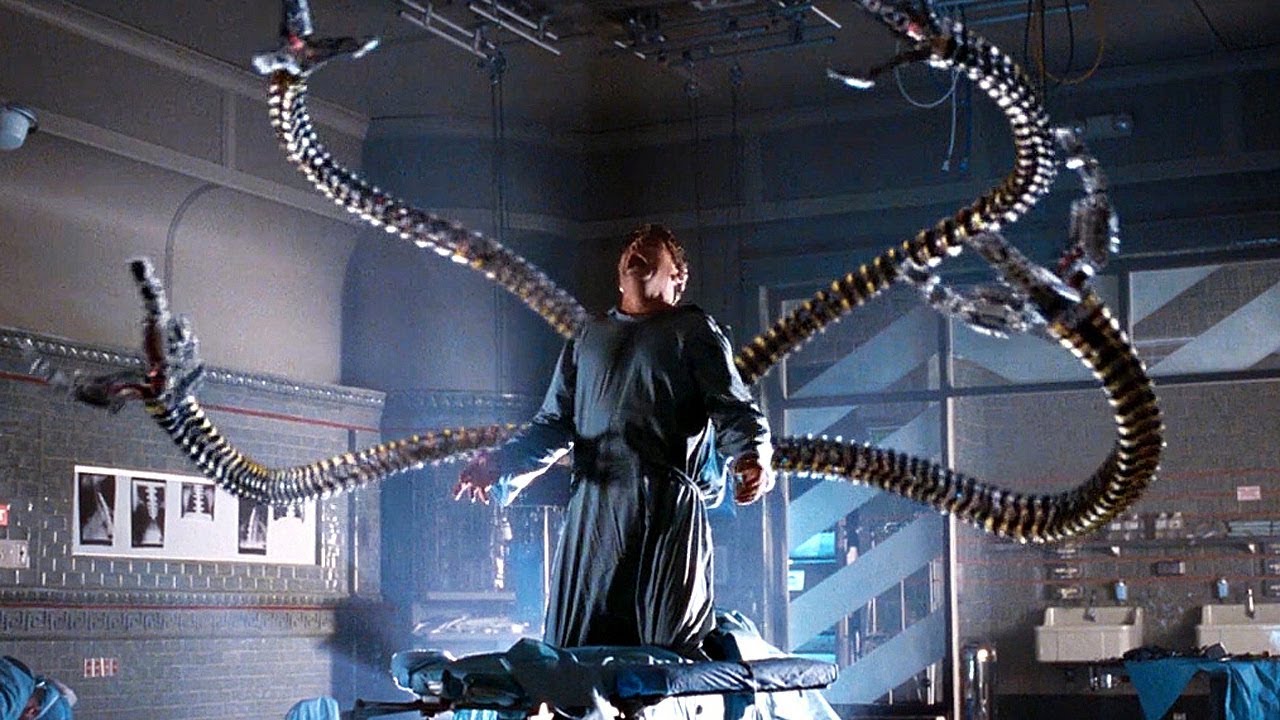
When Sony announced him as the director of 'Spider-Man' in 2002, my favourite superhero in the hands of my favourite director, I read the news twice to make sure I hadn’t hallucinated it. The movie delivered: it looked like it could have been made in 1962 if 1962 had had the budget, and underneath the comic-book reverence were Raimi’s actual hallmarks: dark humour, the camera’s sympathy for the kid being put through every wringer the script could find, a kinetic spaghetti-western grammar in the action. 'Spider-Man 2' doubled down. The operating-table sequence where Doc Ock’s arms wake up is a Raimi short film smuggled into a Marvel tentpole, every Evil Dead trope rehearsed in chrome.
And then it stopped. 'Drag Me to Hell' in 2009 was the last time he was let off the leash, and that one was rated PG-13 (fine for 'Spider-Man'; for horror, one hand tied behind his back). 'Oz the Great and Powerful' happened. 'Doctor Strange in the Multiverse of Madness' happened, and you could see Raimi inside it trying to do Raimi things while the Marvel template confiscated his pencils between takes. For about fifteen years he was being paid to be Sam Raimi with the Sam Raimi parts removed.
'Send Help', which I caught on Disney+ last week, is the first one in twenty years where the parts are back.
Rachel McAdams plays Linda Liddle, a corporate strategist who’s spent seven years being competent and invisible at a consultancy, promised the Vice President role, watching it go to Bradley (Dylan O’Brien), the late CEO’s frat-boy son, instead. Bradley brings her along on a business flight to Bangkok ostensibly to give her one last chance to prove herself, in practice to fire her at altitude in business class. The plane goes down. They are the only two on the island. The film is then ninety minutes of a power dynamic running through every available temperature setting, and Raimi shooting it like he’s been waiting twenty years to shoot something he was actually allowed to finish.
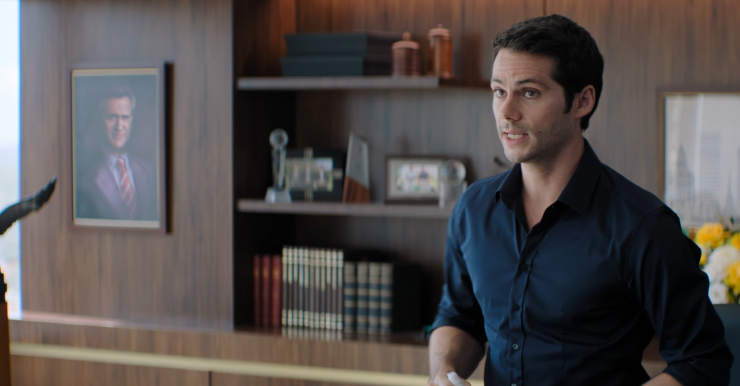
The signatures are back. McAdams is put through a literal wringer: sunburned, soaked, and bleeding from places people don’t normally bleed from. The Raimi protagonist contract is honored fully: you will be wrecked, and the camera will love you for it. Effects feel practical even where they’re digital; a sequence with projectile vomiting and a CPR-as-rescue gag does the same work the Evil Dead pencil-in-the-ankle did in 1981, where you feel the texture before you process the gag. Danny Elfman is back, doing the cheeky-strings menace he hasn’t done in years. A blink-and-you-miss-it Bruce Campbell portrait hangs on Bradley’s office wall: the Raimi signature he’s been slipping into every film since 1981. And the grammar of dark humour, the kind that doesn’t tell you when to laugh, is back in a way the studio comedy machine cannot replicate.
It’s not flawless. The office-setup opening runs longer than it needs to, partly because the film wants you to dislike Bradley properly before the island starts wrecking him. The premise is older than its confidence in itself; you can feel the screenplay weighing the various twist-rotations a survival-horror two-hander allows. There are fifteen minutes of fat in the middle that a tighter editor would have lost. Raimi’s leanest films, 'A Simple Plan' and 'Army of Darkness', never let themselves get this comfortable with runtime. The film is being graded on a “best Raimi in twenty years” curve, which makes its grade easy.
What matters more than how 'Send Help' compares to 'A Simple Plan' is how it compares to the last two decades of Raimi directing other people’s films well. 'Send Help' is the first one in twenty years where the camera moves because Raimi wanted it to. The gross-out gags land gleefully. The suffering protagonist is sympathised with through her suffering, while she’s still in it. The signals he’d been smuggling, in small doses, inside Doctor Strange’s astral sequence and 'Drag Me to Hell'’s possessed-goat séance — that the original guy was still in there — 'Send Help' confirms.
The kid in the nineties whose parents wouldn’t let him watch 'Tanz der Teufel' because the Bundesprüfstelle said so was being protected from something. 'Send Help' is what he was being protected from. It is also the film Raimi has been waiting twenty years to be allowed to make. Inside the movie, Linda gets her promotion back. Outside it, so does Raimi.