Inside the larger puppets in ‘Wildwood’ is a mechanism that makes them breathe.
Laika calls it a ‘breather’. A small diaphragm sits inside the body and raises and lowers the chest while an animator moves everything else one frame at a time. The studio experimented with the idea on ‘Missing Link’; by ‘Wildwood’, apparently, merely giving a puppet a face, clothes and functioning joints no longer counted as finishing the job. It also required lungs.
This is one detail in a production full of numbers that sound slightly vindictive. Laika brought footage from ‘Wildwood’ to the Toronto International Film Festival last week and talked about 49 animators working across 231 weeks. More than 230 puppets were built. A set visit published this week put the number of replacement faces at 140,000.
There are considerably easier ways to make a film.
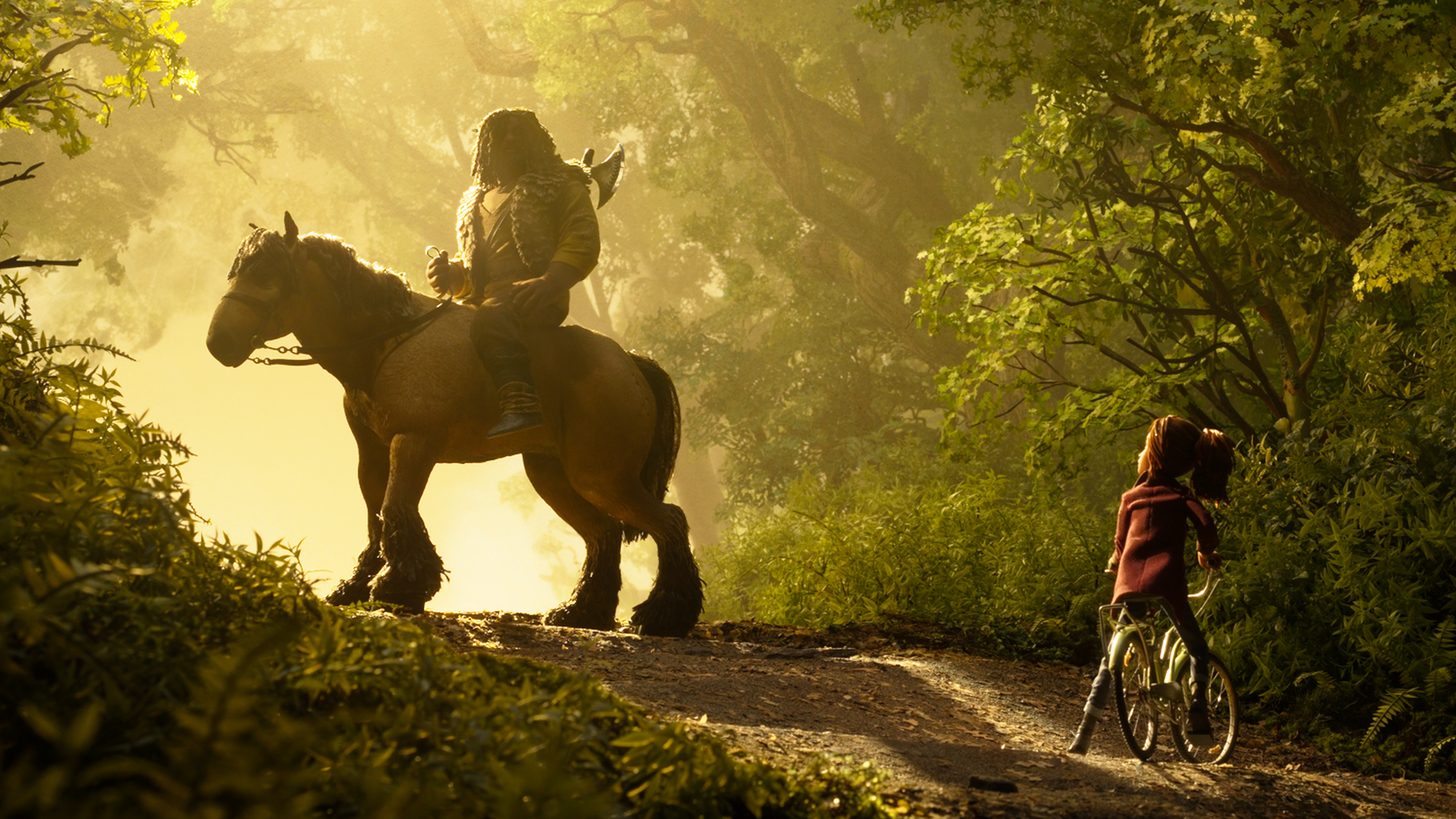
And yet the footage doesn’t look laborious. A bicycle chase through Portland moves with real speed. Clothes settle naturally. Faces change by degrees so small that you stop looking for the change. The characters breathe, because of course they do. Laika has become frighteningly good at making several years of people touching tiny objects look like nobody touched anything at all.
Stop-motion used to make the trick much easier to catch.
Watch Ray Harryhausen’s skeletons in ‘Jason and the Argonauts’ and you can feel the intervention between frames. Aardman never minded leaving fingerprints on the furniture. Even ‘Coraline’, already an astonishingly sophisticated film in 2009, still lets the viewer enjoy the physical fact of it. The Other Mother may be terrifying, but she is also unmistakably an object somebody built in a room.

I like that about stop-motion. A puppet has weight before the animator does anything to it. Light lands on a real cheek. A jumper has fibres. Somewhere outside the frame, somebody has spent part of Wednesday worrying about an elbow.
Laika has spent seventeen years making all of this harder to notice.
‘Wildwood’ is the studio’s sixth feature and its first since ‘Missing Link’ in 2019. Director Travis Knight has said he wanted to adapt Colin Meloy and Carson Ellis’s novel for sixteen years, but the studio could not make the film he had in mind when he first fell for the book. The story required enormous environments, flying creatures and action on a scale that is mildly inconvenient when your actors can fit in a backpack.
So Laika kept developing the process.
‘Coraline’ pioneered 3D-printed replacement faces on this scale. ‘Wildwood’ can use expressions manufactured for individual shots. Eyes are still adjusted by hand. Armatures hold poses inside the bodies; magnets keep faces attached. Computers and 3D printers are everywhere in modern Laika, usually in service of making the eventual image feel less like a technical demonstration.
Technical demonstrations are terrible movies. I have no particular desire to spend two hours admiring the tolerances on a puppet’s skull. The work succeeds when Prue is riding through the Impassable Wilderness and I am thinking about Prue, rather than wondering whether her left eyebrow came from tray 7B.
Still, something goes missing when the technique becomes invisible.
Laika seems perfectly aware of this. Its behind-the-scenes material is full of faces laid out on tables, sets with their ceilings missing and animators bent over figures that look absurdly small compared with what eventually appears on screen. The studio sells you the illusion, then walks behind the curtain and points at all the people who ruined their backs making it.

I am glad it does.
None of this makes ‘Wildwood’ good by default. A movie does not improve because somebody spent six months adjusting a bird, and animation history contains enough heroic production stories attached to mediocre films to settle that one.
I also haven’t seen ‘Wildwood’. Toronto saw footage. The finished film reaches Swedish cinemas on 28 October, shortly before the Stockholm International Film Festival begins on 11 November. I would quite like the movie to be good before appointing its tiny diaphragm a triumph of cinema.
But the Toronto material already shows how far Laika has pushed the form.
The studio once had to convince an audience that a puppet could move. Now it can make you forget you’re looking at one. ‘Wildwood’ looks close to the point where the image simply works and all the ridiculous physical business underneath it disappears.
The production footage has become half the pleasure.
You watch the finished shot. It moves effortlessly.
Then somebody puts a puppet on a workbench, opens its chest and shows you the little machine that makes it inhale.
231 weeks.
Of course they built lungs.