US congressman Ritchie Torres announced a proposed law on Thursday that would require publishers to provide an offline mode before shutting down a game's servers. He singled out ‘NBA 2K25’, whose online services will close at the end of December, as an example of why American consumers need better protection.
‘NBA 2K25’ already has several offline modes. They'll continue working after the shutdown. MyCAREER, where players create a basketball player and guide him through an NBA career, will disappear along with the game's other online features.
Depending on how Torres's proposal is eventually written, 2K might be able to comply without saving MyCAREER at all.
The proposed Power to the Players Act would direct the Federal Trade Commission to establish rules protecting ownership of purchased video games. It would also give buyers the right to transfer or resell their games, a considerable departure from the licences under which most digital purchases are currently sold.
“When you pay for a game, you should own it,” Torres said in Thursday's announcement.
He went on to describe a game that can be withdrawn when a company decides to stop supporting it as a rental masquerading as a purchase. That's an appealing argument, particularly when the game in question costs $70 or more. There is rather a lot riding on what the proposed law considers a playable game, though.
You can keep the basketball
‘NBA 2K25’ launched on 6 September 2024. It will be removed from digital storefronts on 30 October this year, and its online services will close on 31 December.
As Popkulturist reported earlier this month, the game originally sold for $69.99 in its standard edition. A $99.99 All-Star Edition included virtual currency, while a $149.99 Hall of Fame Edition added, among other things, a year's NBA League Pass subscription.
Players could also spend money improving their created basketball characters. The game's virtual currency, called VC, can be earned through play or purchased separately. Among its uses is increasing a MyCAREER player's attributes.
You can spend months developing that character, join an NBA team, pursue championships and take him into The City, the game's online social hub. You can buy clothes for him, compete against other players or simply concentrate on his professional career.
2K designed MyCAREER around the pleasure of building something that lasts. At launch, the publisher encouraged players to create the next great NBA dynasty and establish themselves among basketball's legends.
The character won't last quite as long as the marketing suggests.
From 1 January 2027, MyCAREER will be inaccessible. MyTEAM, where players collect basketball cards to assemble teams, will also disappear. Any unused VC won't have a continuing role in the retired game's online economy.
The official shutdown notice lists the modes that survive: Play Now, which allows ordinary basketball matches; MyNBA, where players manage an NBA franchise; and the WNBA-focused modes The W and MyWNBA.
That's a substantial game left behind. Someone who bought ‘NBA 2K25’ to manage a franchise can carry on doing so. Someone who spent two years developing a MyCAREER player is out of luck.
2K did warn customers. Its online services have never been promised indefinitely, and earlier games in the series have been retired on similar schedules. Maintaining multiplayer infrastructure costs money, while MyCAREER's online systems are woven into the rest of the experience. There would be technical work involved in separating them.
The question is why the single-player career has to disappear with the multiplayer infrastructure. Nothing in 2K's shutdown notice offers an explanation of why that part of the game cannot be preserved locally.
Torres's announcement doesn't yet tell us whether his law would require one.
Ubisoft has already tried something else
Exactly one year ago today, on 16 October 2025, Ubisoft released an update for ‘The Crew 2’, its open-world racing game.
Ubisoft had previously shut down the original ‘The Crew’, leaving owners unable to play it. The decision helped inspire the Stop Killing Games campaign, which has since brought the issue before European institutions and attracted considerable support from players.
For the sequel, Ubisoft took another approach. It introduced Hybrid Mode, allowing players to switch between online play and an offline version that no longer depends on the publisher's servers.
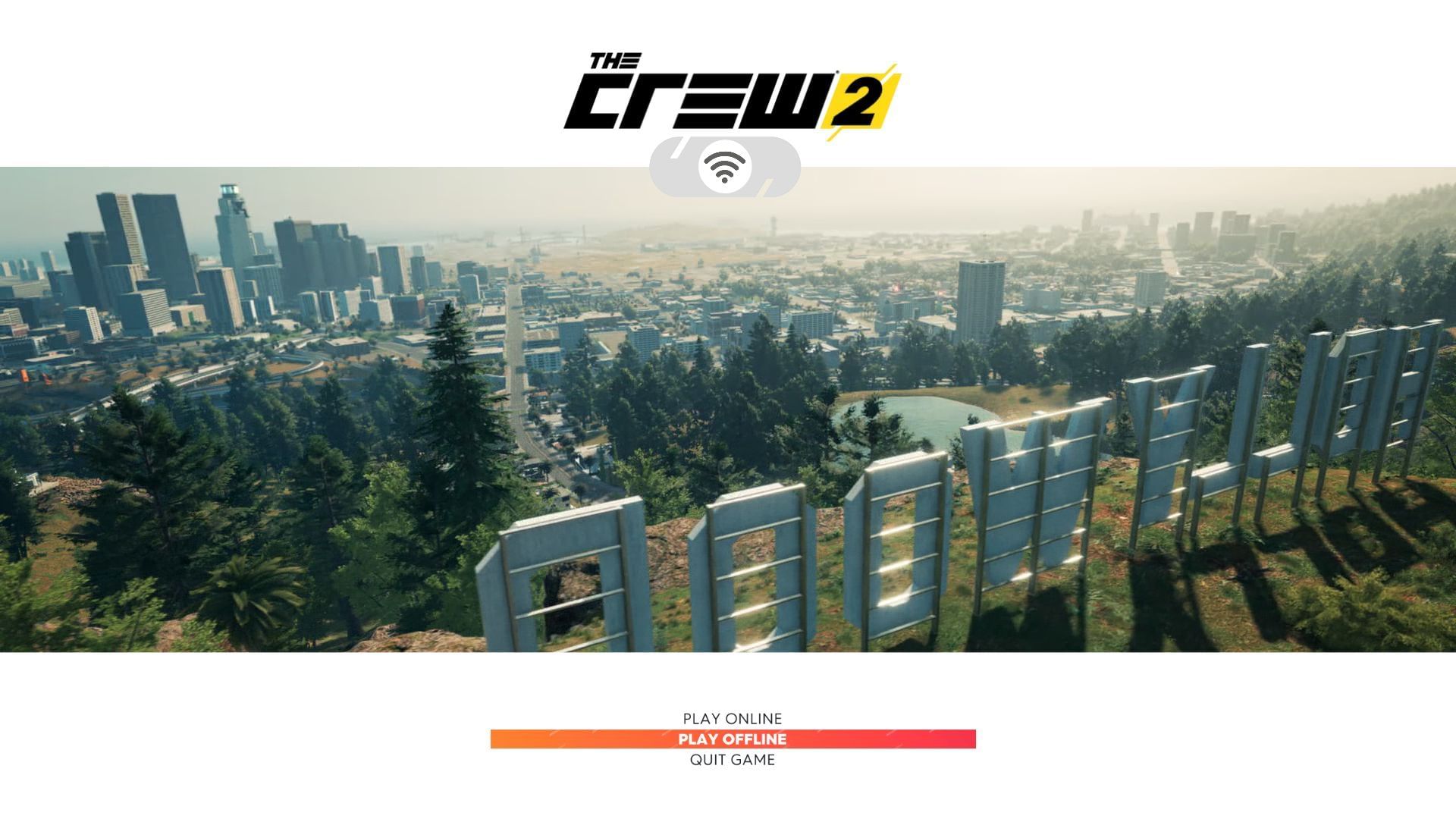
More importantly, they could export their existing progress into a locally stored save. Vehicles they'd collected and much of what they'd achieved would remain available.
Ubisoft's explanation of Hybrid Mode makes its limitations clear. Multiplayer activities, leaderboards and several connected features aren't available offline. Progress made offline doesn't transfer back to the online save, and exporting an updated online save overwrites earlier offline progress.
There's an actual preservation system here, with compromises that players can examine for themselves. Ubisoft didn't have to keep running its multiplayer services indefinitely to make it possible.
In April this year, the company even expanded the offline functionality, allowing players to preserve more of their custom liveries and vehicle statistics. The offline conversion was something Ubisoft continued working on after its initial release.
Whether 2K could offer a comparable solution for MyCAREER is unknown. The two games have very different designs, and basketball progression is tied to an online economy that might be difficult to disentangle. Nobody outside the relevant development teams can reasonably promise an easy conversion.
But ‘The Crew 2’ gives lawmakers a useful example. Ubisoft preserved a meaningful part of the purchased experience, including progress players had spent years earning.
For ‘NBA 2K25’, preserving the modes that were already offline requires no comparable conversion at all.
What would the law actually require?
Torres has announced his intention to introduce legislation, but the detailed bill text has not been made available. The announcement says games with online functionality must provide an offline mode before their supporting servers shut down.
It doesn't specify how much of the original game must remain playable.
That omission could prove important. If any existing offline mode is sufficient, a publisher might be able to shut down its most heavily used features while leaving customers with something that technically qualifies as a working game.
Requiring preservation of substantial single-player functionality would be a stronger consumer protection. It would also be harder to write into law. Publishers could reasonably point to development costs, complex server dependencies and games designed entirely around multiplayer interaction.
A 50-player online contest cannot simply continue as the same experience without its servers. An individual career mode might be more adaptable, depending on how it was built.
Lawmakers would have to decide how far a publisher's responsibility extends. Should companies be required to plan for a game's eventual shutdown during development? Would there be exceptions for technical impossibility or disproportionate cost? Could publishers satisfy their obligations by making server software available to the community?
The announcement doesn't answer those questions.
Torres's proposed resale rights raise further complications. Most digital storefronts attach games to individual accounts, and publishers rely on licensing arrangements that don't easily accommodate second-hand sales. Transferring a purchase to another account would presumably require a mechanism that prevents the original owner continuing to use the same licence.
That's a significant legal and commercial change, quite apart from keeping games working after their servers retire.
European campaigners have already discovered how difficult the legislative route can be.
The citizens' initiative ‘Stop Destroying Videogames’, associated with Stop Killing Games, collected 1,294,188 verified signatures. Its organisers asked the European Commission to prevent publishers from rendering purchased games unplayable when official support ends.
In June, the Commission declined to propose such legislation at that stage. It pointed to existing consumer protections and intellectual property considerations, and promised to begin discussions with publishers and consumer representatives on an industry code of conduct before the end of 2026.
Torres might pursue a more ambitious approach in America. Whether his bill will make it through Congress, or even what obligations it will ultimately contain, is uncertain.
And with the shutdown approaching, none of this is likely to help current owners of ‘NBA 2K25’. The proposal hasn't been introduced, and there is no indication that any eventual law would apply to games whose servers have already been retired.
There is one last detail about MyCAREER worth mentioning.
When 2K originally introduced The City, it advertised a Walk of Fame celebrating every NBA championship team. Spaces were reserved for the achievements of players' own MyCAREER dynasties, which would be commemorated alongside real NBA history.
I rather like that. You spend countless evenings building an imaginary basketball career, eventually win a championship and get a little monument to your efforts.
On New Year's Day, The City closes. So does its Walk of Fame.
Fortunately, the actual basketball will be fine.