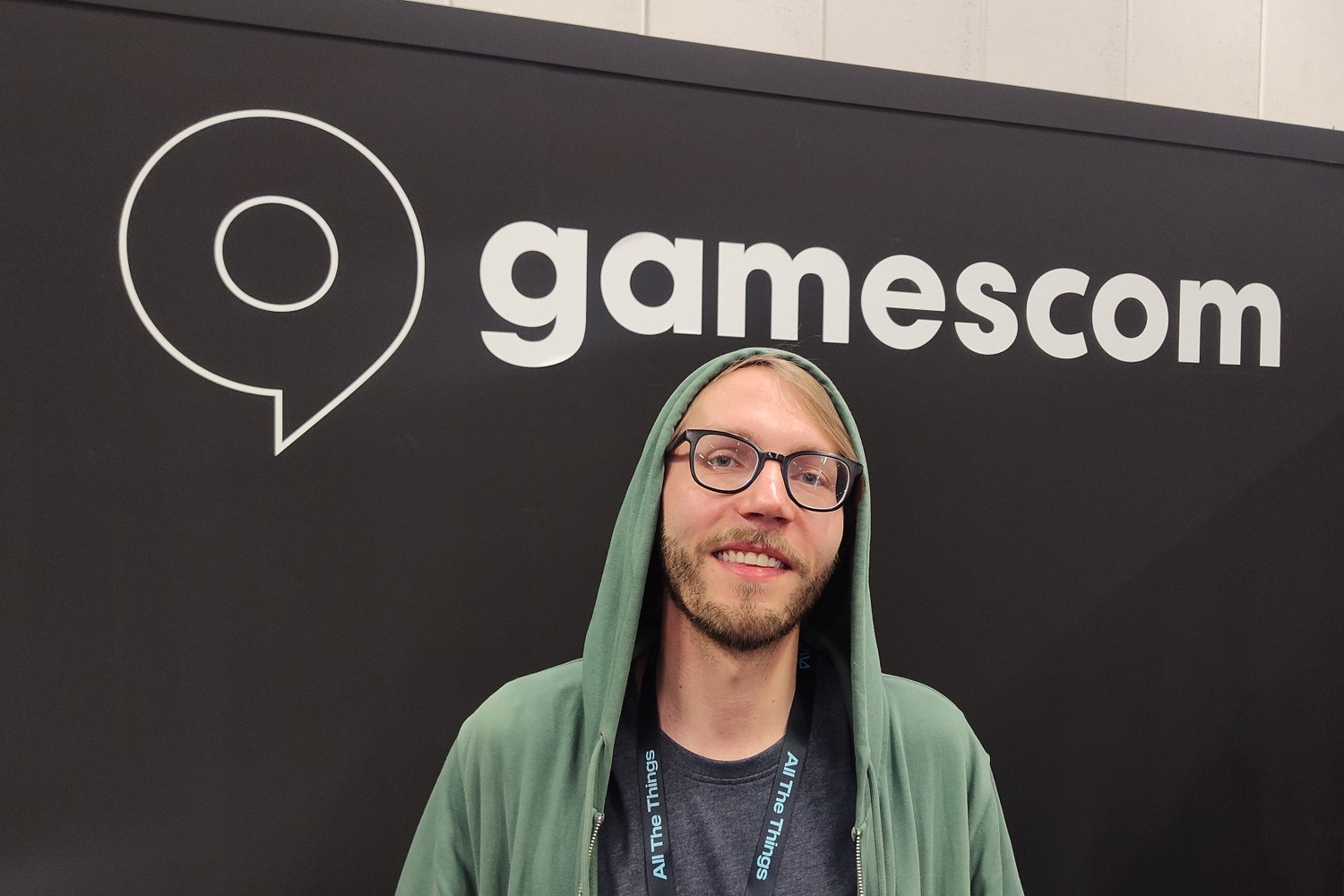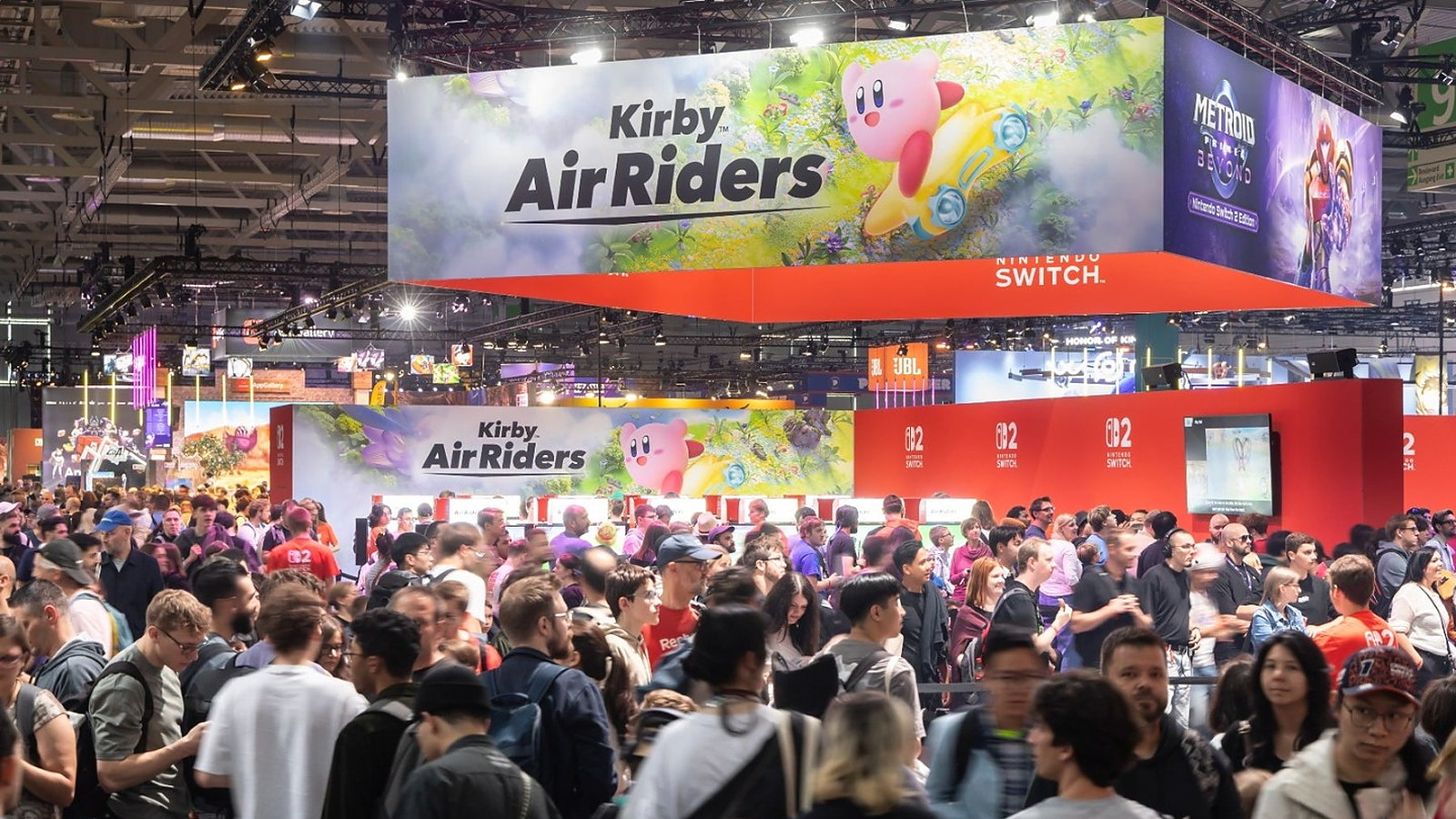
I have never been to Gamescom. Popkulturist has a press badge anyway, so somebody in Cologne has decided that the publication and its editor may discover the scale of the place together.
I have chosen not to appeal.
The advice for first-timers begins with comfortable shoes and soon resembles expedition planning. Crossing the grounds apparently requires its own timetable, while water is discussed with the seriousness usually reserved for medication. Gamescom sounds like a minor military deployment with better tote bags.
Every available metre of exhibition space has been booked this year. Several hundred thousand people are expected to spend an August day moving between games in various states of completion, alongside a few represented less by the game itself than by a queue whose endpoint may be in another hall.
The enthusiasm makes perfect sense. People still care enough to travel and pay for the privilege of standing in line beside thousands of others who made the same calculation. My Gamescom begins on Monday, 24 August, at gamescom dev, where Amir Satvat’s opening keynote, ‘The Games Industry Reset: What Happened and What Comes Next?’, asks what the industry’s ‘reset’ has done to the people inside it. The conference continues on Tuesday. Gamescom opens to trade visitors and media on Wednesday. The public arrives on Thursday.
Reset is a comforting word when applied to a machine. You press a button and wait for the lights to return, hoping the problem was temporary. Workers, however, tend to notice what disappeared while the screen was dark.
The games business has spent the past few years closing studios and cancelling projects, while its announcements settled into a shared language of restructuring, difficult decisions and refocusing. Every company had apparently encountered its individual emergency at the same time.
By the time the public arrives, the industry will have spent three days talking about hiring and investment, while trying to decide what recovery is supposed to look like. Then the doors open and abundance takes over.
The distance between those two versions of games is what I am going to Cologne to follow.
The people behind the numbers
Germany has managed to gain games companies while losing games jobs in the same year. According to game, the association that co-organises Gamescom, the number of companies rose by four per cent to 956. Employment fell by three per cent to 12,235, marking a second annual decline.
The sector became larger on paper while fewer people drew salaries from it.
In a statement to Popkulturist, game called the fully booked event “a strong signal” of confidence in Germany and the international games business. The association also placed a limit on the optimism, saying the industry’s recovery after years of closures and job losses remained “only partial”.
Gamescom can thrive while the people making its exhibits remain exposed. The bookings show that companies still value appearing there; they cannot tell me how secure the teams behind those stands will be once the banners come down.
Amir Satvat has spent the layoff years helping games workers find somewhere to land. He told Popkulturist that “60%+ of our ASGC placements are in non-games roles”, referring to placements made in 2026 through his Games Community.
Its basic meaning is striking enough: a substantial share of the people finding work through the community are rebuilding their careers outside the industry they trained for.
That move requires more than changing the industry field on LinkedIn. Satvat said candidates have to translate their skills for unfamiliar sectors and build new networks. The work may transfer cleanly. Proving it still falls to the person who has just lost a job.
When I asked what a full Gamescom means from where he sits, Satvat answered with a request.
“Appreciate the people that you see there at the show.”
He put the number of layoffs since 2022 at nearly 60,000, with much of the damage concentrated in North America and Western Europe. Some of the people entering Cologne will be looking for another studio. Others will be working out how long they can afford to continue looking.
A lanyard does not reveal which one.
What a booth has to do
ROTxBLAU is taking a stand in the public area for the first time while preparing ‘Grandma(88)’ for release later this year. Co-founder Richard Minkus expects the studio’s single demo station to reach a number of players in the low hundreds over the course of the event, which is unlikely to make champagne appear on its own.
The booth therefore has other work to do. It introduces the game to players, supports a Steam promotion and may lead to coverage or a publisher meeting. Depending on where a project sits in development, Minkus said, a studio can have a productive Gamescom without entering the public area at all.
For Minkus and his team, Cologne compresses months of industry access into one crowded event. It lets them maintain relationships without turning the year into a tour of European conference centres.
The public stand remains expensive, and its direct audience may be modest. Its value lies less in immediate sales than in the wider package around it: contact with players, material for social media, press coverage and conversations with publishers and other industry contacts.
The studio maintains a small permanent team and brings in freelancers when a project needs them. Financing for ‘Grandma(88)’ allowed the studio to grow for a while, but even as the game approaches release, the team is already thinking about its next project and searching for follow-up financing.
Original projects sit beside commissioned work because the next round of funding cannot be assumed. Reaching Gamescom does not remove that uncertainty; it merely gives the team a more impressive place from which to discuss it.
From the aisle, every booth looks established. Behind some of them, the next payroll is already being negotiated.
Small studios are often described as the future of games. Many would settle for enough financing to remain in the present.
No shelter at either end
Experience offers no guaranteed shelter either. Tom Rutjens, a senior 2D and 3D game artist formerly at Linx Interactive, has worked in games for more than 18 years. It has made him better at judging scope, estimating time and seeing problems before they become expensive. It has not made him immune.
I asked whether all that experience still changed the odds. “A few years ago I probably would have answered that question differently,” Rutjens told me. Studio closures have put large numbers of experienced developers into the market at once, making even senior positions fiercely competitive. Breadth still makes somebody valuable. It no longer promises that the industry will keep a place for them.
Vaidotas Zamas, a Lithuanian sound designer and composer formerly with ‘My Neighbor Alice’, lost his contract around three months into his partner’s pregnancy. As a contractor, he received no severance, leaving the couple to cut costs and live from savings while he looked for anything that might support them before the baby arrived.
The search brought another unpaid job: making portfolio pieces, then watching an algorithm decide whether anybody would see them. “Not all of us wish to be public figures,” Zamas told me. “A lot of us just want to do our jobs quietly.”
Raúl Pernía had only begun establishing himself in games when his career was interrupted. The former Vermila Studios game designer lost his job in a collective dismissal after two years on ‘Crisol: Theater of Idols’. His days remain full, although the work has changed: applications, unemployment paperwork and rebuilding the documents that explain his experience now consume much of his time. He is applying for game-design positions while considering quality assurance and UI/UX work, competing against developers with much longer careers for a limited number of openings.
“There is an emotional side to it as well,” Pernía told me. “You do not only lose a job; you suddenly stop seeing the people you shared your day-to-day life with, and you have to leave behind a project that occupied a very important part of your life.”
Employment figures record the missing position. They have no column for the people who disappear from your daily life along with it, or for the strange business of turning two years of shared work back into a portfolio attachment.
Pernía continues with personal projects while searching for a route back into games. The uncertainty, he said, is the hardest part.
The scale of Gamescom leaves him “both encouraged and conflicted”. The demand proves that players remain interested, which gives him hope, but attendance figures say little about the stability of the companies behind the stands.
“Exhibition space, announcements and audience figures cannot tell us whether studios are financially stable, whether developers can build lasting careers or whether teams will still exist to make their next game,” he said.
The gap becomes harsher in Spain, where the closure of one company leaves fewer nearby studios and therefore fewer places for its former employees to go. Pernía wants Gamescom to succeed. He wants the enthusiasm inside those halls to mean that there will be work for the people making whatever the visitors come to see next.
The first part is already guaranteed.
Looking past the lights
I arrive at my first Gamescom without a favourite previous edition to mourn, which is convenient. I expect to be impressed. Several hundred thousand people gathering because they care about games is impressive, and the work does not lose its meaning because the companies selling it have become very good at writing redundancy notices.
Satvat’s keynote comes on Monday. Gamescom opens to trade visitors and media on Wednesday, and the public follows on Thursday. My assignment is to carry what was said in that first room through the rest of the week and see how it holds up once the doors open.
Somewhere underneath the lighting rigs, people will be carrying CVs.
Popkulturist will not attempt to publish every trailer, announcement or controlled leak. Larger teams have booked those appointments already.
I want to meet the studios paying to remain visible and the developers trying to remain in games at all. I also want to watch the public, whose enthusiasm has survived decisions it never made and balance sheets it will never see.
My calendar currently contains the opening keynote and a great deal of empty space.
That, at least, seems fixable.