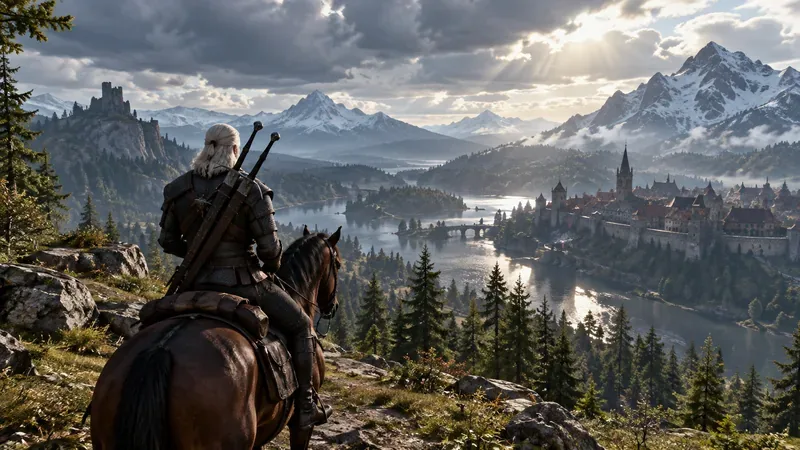
I am playing ‘The Witcher 3’ eleven years late. This should be embarrassing, except CD Projekt Red has helpfully remastered it at exactly the moment I got around to Velen, allowing me to pretend I planned the whole thing.
The remaster arrived on 29 September as a free upgrade, with improved visuals, combat, animations and character progression. It also gave everybody who already owned the base game both expansions for free. A week later, ‘The Witcher 3’ reached 137,724 concurrent players on Steam, its highest number ever. Apparently I have managed to be late and punctual at the same time.
I have spent years buying games faster than I can play them. There are 80 in my Steam library, which seems positively restrained compared with some of the accounts I have seen. I have played a fraction of them. I also own a Steam Deck specifically designed to make this behaviour portable. The machine follows me around the house carrying an increasingly accusatory collection of entertainment: ‘Baldur’s Gate 3’, ‘Disco Elysium’, games I abandoned halfway through and things I bought for €7.49 because €7.49 felt too cheap to leave them there.
Usually I continue playing ‘The Witcher 3’.
For most of gaming history, having access to too few games was an ordinary condition. As a child, I did not possess a library. I possessed some cartridges. A new game was a financial event, and if it was bad, it remained the new game. You learned its unfair third level anyway and eventually found the hidden room because you had been staring at the same twelve rooms for a month. Games acquired geography through repetition. Their limitations became familiar enough to feel like furniture.
SteamDB counts 142,474 games released on Steam. More than 20,000 of them arrived this year alone, with three months still to go. In 2025, 21,264 games were released on the platform. 2026 is on course to pass that.
October looks as though somebody tipped a cupboard over. ‘Hellraiser: Revival’, ‘Planet Zoo 2’, ‘Valor Mortis’, ‘Phantom Blade Zero’ and ‘Toy Story 3 Complete Edition’ are all arriving, alongside hundreds of smaller games whose developers would quite reasonably like you to notice them too.
Steam is having a spectacular year while all this is happening. Estimates from Alinea Analytics put revenue through September at $16.5 billion. September alone brought in an estimated $1.6 billion. The Steam Autumn Sale made the scale particularly silly: more than 44,000 games could be bought for $5 or less.
At some point, ‘cheap’ stops being useful information. If I walked into a shop containing 44,000 excellent sandwiches for five dollars each, I would probably manage to leave without seventeen sandwiches. Put a little green discount rectangle next to ‘Prey’ and apparently civilisation has different rules.
This is how we ended up with the backlog, one of those charming words we have imported from employment into recreation without asking what happened. Nobody has a backlog of sunsets. You do not return from holiday worried about the four beaches you failed to complete.
A new analysis by Coilr looked at 120,283 games across 436 public Steam libraries. In the library sitting at the middle of its sample, 22 per cent of games had never been launched. Count games played for less than an hour and the figure rises to 42 per cent. For libraries containing at least 1,000 games, the median share never launched reaches 50 per cent.
The playtime numbers are stranger still. Half of a typical player’s Steam time went into four games.
436 public Steam libraries · Coilr, 5 October 2026
That gap interests me more than the size of anybody’s library. We are extremely good at accumulating possibilities and remarkably conservative about what we actually do with our evenings.
Buying games is part of the pleasure, of course. Sales make experimentation cheap, bundles dump things into libraries almost incidentally and free giveaways make untouched-game statistics messy. Nor do I particularly yearn for the old days when one unfortunate birthday present could determine a child’s entertainment schedule until Christmas.
What abundance has changed is the experience after you choose.
Another game is permanently waiting inside the game you are playing. A slow opening now competes with everything else installed on the machine. A difficult combat system has to survive the knowledge that something else will make you feel competent within thirty seconds. An RPG asks for eighty hours while the store page is offering twelve more RPGs and reminding you that several of them are 60 per cent off until Thursday.
You can always leave.
I think this is partly why I am enjoying ‘The Witcher 3’ so much after finally settling into it. Recently I spent part of an evening following a trail through the woods with Ciri. Very little happened. There were wolves. Afterwards, I asked how far through the story I was, which is embarrassing in retrospect because I had just spent a pleasant evening playing a game and immediately requested a progress report.
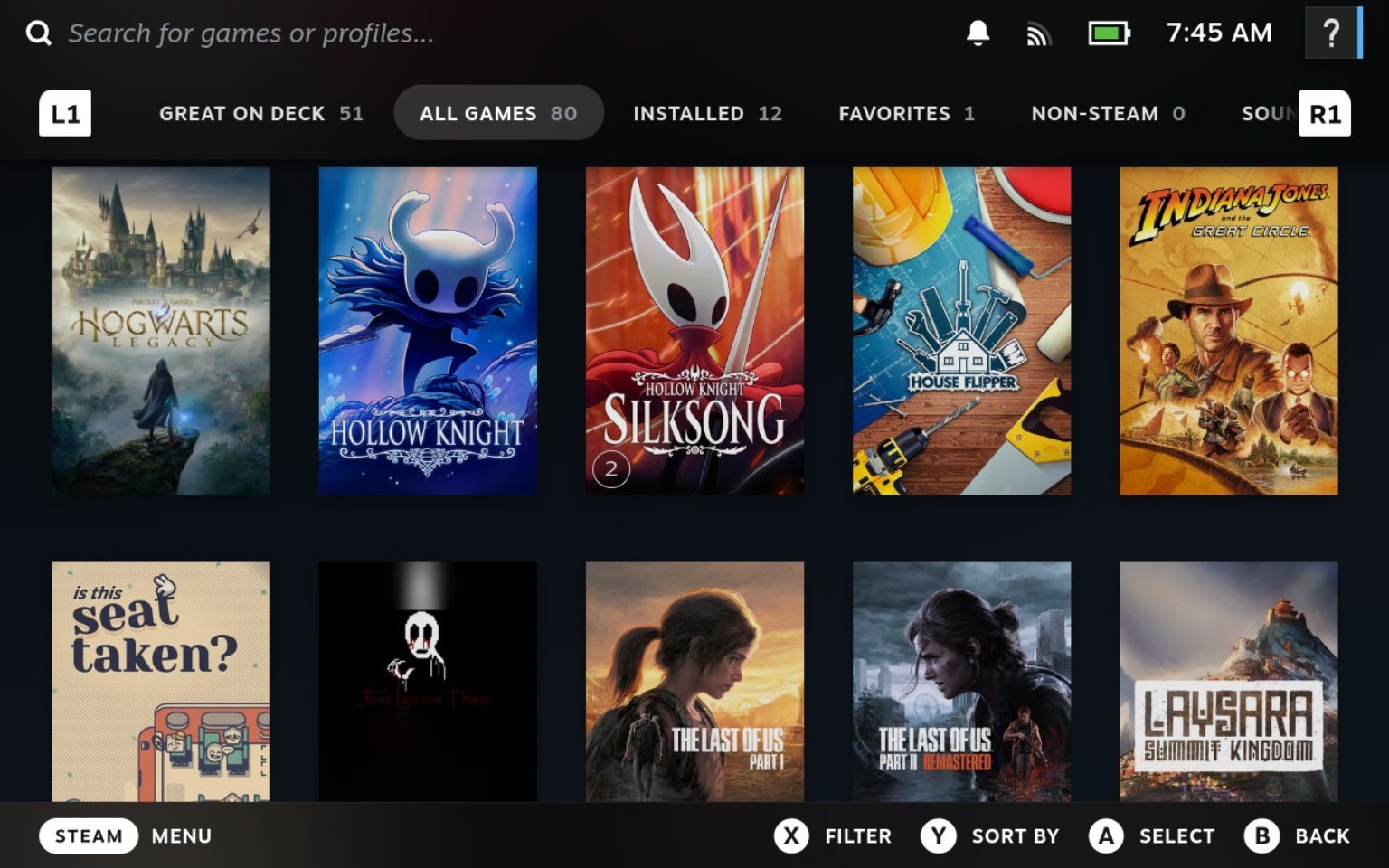
Games encourage this. Completion percentages sit beside achievement percentages and playtime counters. HowLongToBeat will estimate the size of the commitment before you make it. Seasonal games add deadlines and daily rewards. The library itself remembers exactly how many hours you have spent on everything.
Somehow leisure acquired analytics.
Once a library becomes a backlog, the game you are enjoying can even start to feel like the reason you are failing to play the others. That is an absurd burden to put on a hobby, but it mirrors a genuine problem on the other side of the screen.
More than 20,000 Steam releases in a year do not give 20,000 games a meaningful chance of finding an audience. They create an attention problem of extraordinary proportions. Steam can have a record year while an individual game disappears beneath the next week’s releases. Meanwhile, somebody can sit in front of a library containing 300 games and conclude that there is nothing to play.
The scarce thing has moved. Developers need people to notice them, and players need enough time to notice anything properly.
That also helps explain the appeal of returning to something old. Coilr looked at the 100 most-played games on Steam and found that, averaged across the week ending 4 October, the player in the middle was in a game 8.8 years old. Only 15 per cent were playing something released during the previous twelve months.
‘The Witcher 3’ reaching a new Steam concurrency record eleven years after release suddenly looks less peculiar. Its age may now be an advantage. Millions of people have already performed the sorting. Reviews, recommendations, patches, arguments and cultural memory have spent a decade reducing the risk of choosing it.
A backlog offers possibilities, which sounds wonderful until you have to choose between 300 of them at 9.30 on a Tuesday night.
There are systems for dealing with this. People use spreadsheets, randomisers and rules about finishing two games before buying another. If that makes somebody happier, excellent. I would rather avoid reaching the point where organising my recreation requires inventory management software.
Owning something does not create a debt to it. A game can sit untouched in my library without becoming unfinished business, and forty minutes can be enough to discover that I have seen what I wanted to see. An eleven-year-old RPG can occupy three months while hundreds of releases pass without requiring an apology.
This is obvious enough when written down. Storefronts make it surprisingly difficult to feel. They are built around arrival: new releases, upcoming releases, trending games, expiring sales and wishlists waiting to become notifications. Everything wants the next hour.
Playing a game requires giving the hour to something that has already arrived.
So tonight I will go back to Velen. Somewhere on Steam, another game has probably been released since I started writing this, and I wish it well.
Geralt has work to do. I have finally stopped assigning myself any.