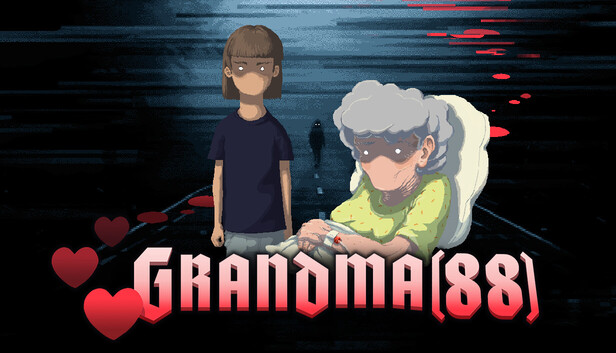
In ‘Grandma(88)’, disagreeing with your grandmother can make the room change. I have been in full-blown family arguments that achieved less.
You play a young woman visiting her dying grandmother and moving through the memories she tells you. Grandma controls the account, including the bits she would rather you accept without questions. Spot a contradiction and you can challenge her. The world around you may change with the story.
Push too hard and she can get angry or stop giving you what you need. Let something pass and the relationship survives, although whatever happened in the family may remain conveniently tidy.
ROTxBLAU calls the idea ‘player versus narrator’. It suits a game about inherited memory unusually well. An unreliable narrator normally has to wait for the plot to expose them. But Grandma? She has access to the scenery.
Her version of events reaches back into her family’s Nazi-era past. ROTxBLAU has worked with the Memorial for the Victims of the Euthanasia Killings in Brandenburg an der Havel, while a public call for family experiences around the Nazi period supplied more than 50 stories for the developers to draw from.
Making any of this into a game rather than an interactive seminar is the difficult bit.
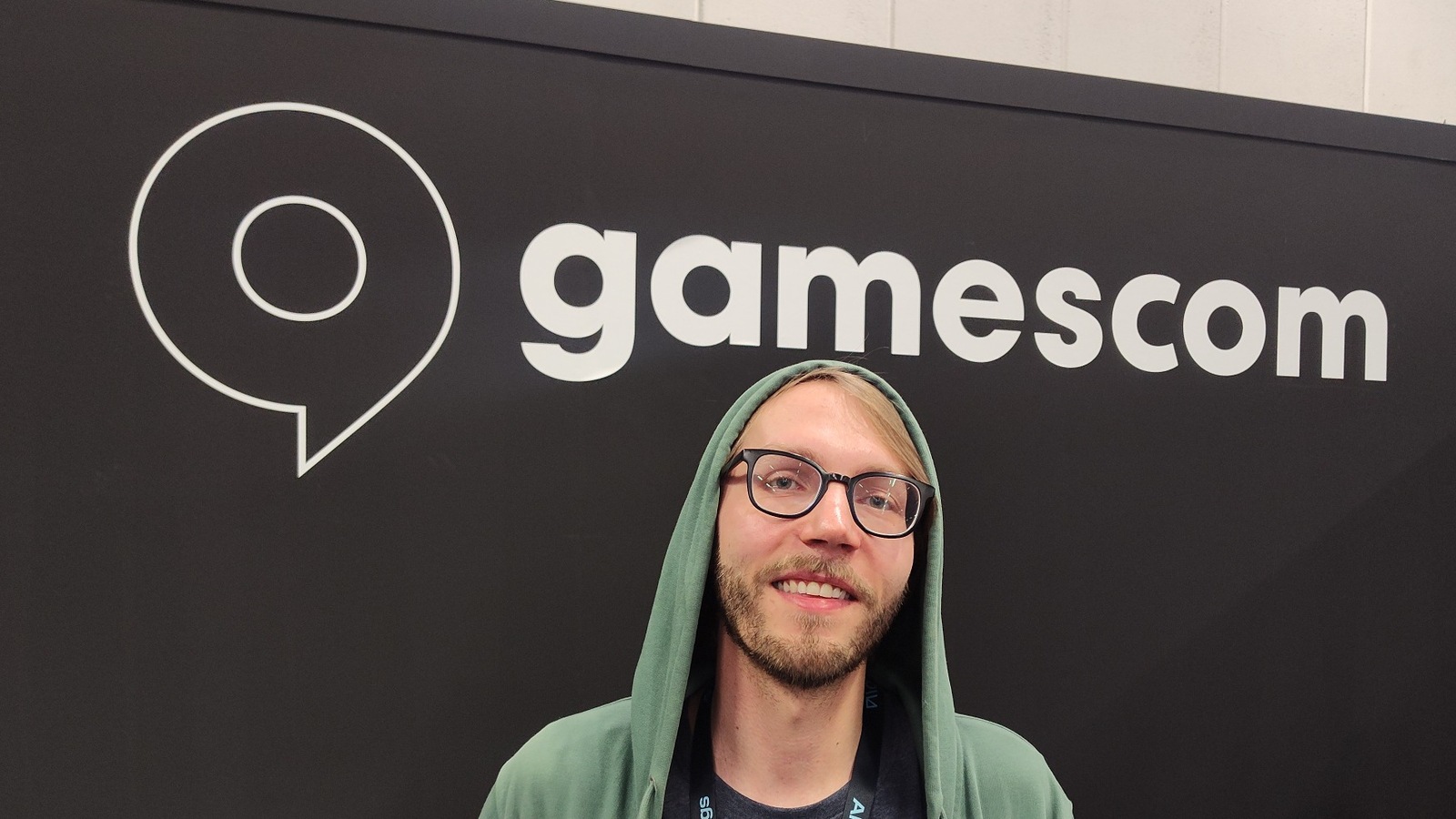
When I meet ROTxBLAU co-founder Richard Minkus at Gamescom, ‘Grandma(88)’ is playable in public for the first time. The studio had hoped to put a Steam demo out during the show as well. It did not make the deadline.
“We’re working hard on getting it done,” Minkus tells me. The team still has to decide whether the demo can appear before release at all.
Gamescom therefore arrives at an awkwardly useful moment.
‘Grandma(88)’ began years ago, and some of its design DNA comes from ‘The Stanley Parable’. The resemblance is easy enough to see, but ROTxBLAU has attached the fight with the narrator to something much less abstract.
You are arguing with Grandma because you need her.
If she shuts you out, information disappears with her. Keeping her trust can matter more than winning an argument, which makes the most interesting decisions slightly uncomfortable. The game asks how far you push somebody you love when you suspect the story they have carried for decades is wrong.
That is a better use of ‘choice matters’ than another dialogue wheel promising red, blue or sarcastic.
The subject also gives ROTxBLAU something an indie studio badly needs at Gamescom: a game people can explain afterwards.
Minkus says the studio has 25 to 30 media and publisher appointments during the show. People are turning up at the stands asking for the team. Their diary is full enough that they have started cancelling meetings.
Last year was different.
“We had to run after people,” he says.
A playable build has changed how people approach them. The theme helps too. Minkus knows ‘Grandma(88)’ is harder to sell commercially than something with a more obedient premise, but it is also easier to notice among several hundred games.
Media attention is one of the studio’s main priorities in Cologne. Players matter too, obviously, but press coverage can reach people ROTxBLAU cannot afford to reach through conventional marketing.
I am aware of my role in this arrangement.
ROTxBLAU expects Gamescom to cost more than €10,000.
Minkus calls that the cheap version.
The team has ten people in Cologne and is using private accommodation instead of paying the kind of hotel prices that briefly make sleeping in Düsseldorf sound sensible. There are two stands to cover, plus travel and the usual collection of expenses that individually look manageable until somebody totals them.
The bigger cost is timing. The studio would quite like to spend the week making the game.
Its current project financing runs into September and October. Minkus says ROTxBLAU has three full-time founders, while the wider team works mostly part-time. Once freelancers are included, he estimates that the studio currently has the equivalent of five or six full-time people. Staffing is near its high point now and will begin falling again as the funded work ends.
That gives the meetings in Cologne a fairly practical purpose.
A publisher could put more money into ‘Grandma(88)’ and give the studio room to finish it closer to the version it wants to make. Press can send people to Steam. Players can wishlist it.
Minkus is refreshingly specific about what success should look like after the fair: more visits to the Steam page, better conversion from those visits into wishlists and publisher conversations that have moved beyond exchanging business cards.
When I ask what would justify spending more than €10,000 on Gamescom, he begins with media coverage.
“Something like your article.”
This is pleasant to hear and slightly dangerous information to give a journalist halfway through an interview.
What he really wants, though, is what comes afterwards. Coverage only matters if somebody sees the game because of it. Steam is crowded enough that ROTxBLAU cannot simply upload ‘Grandma(88)’ and wait for history enthusiasts with unusually specific search habits to find it.
The studio wanted a public demo ready for Gamescom and missed it. The team is still looking for more money. People are finally coming to them instead of the other way around.
For a game about deciding when somebody’s version of events no longer holds up, that is enough uncertainty for one release cycle.
The Steam page already has the wishlist button.
Minkus will know whether Gamescom worked soon enough.