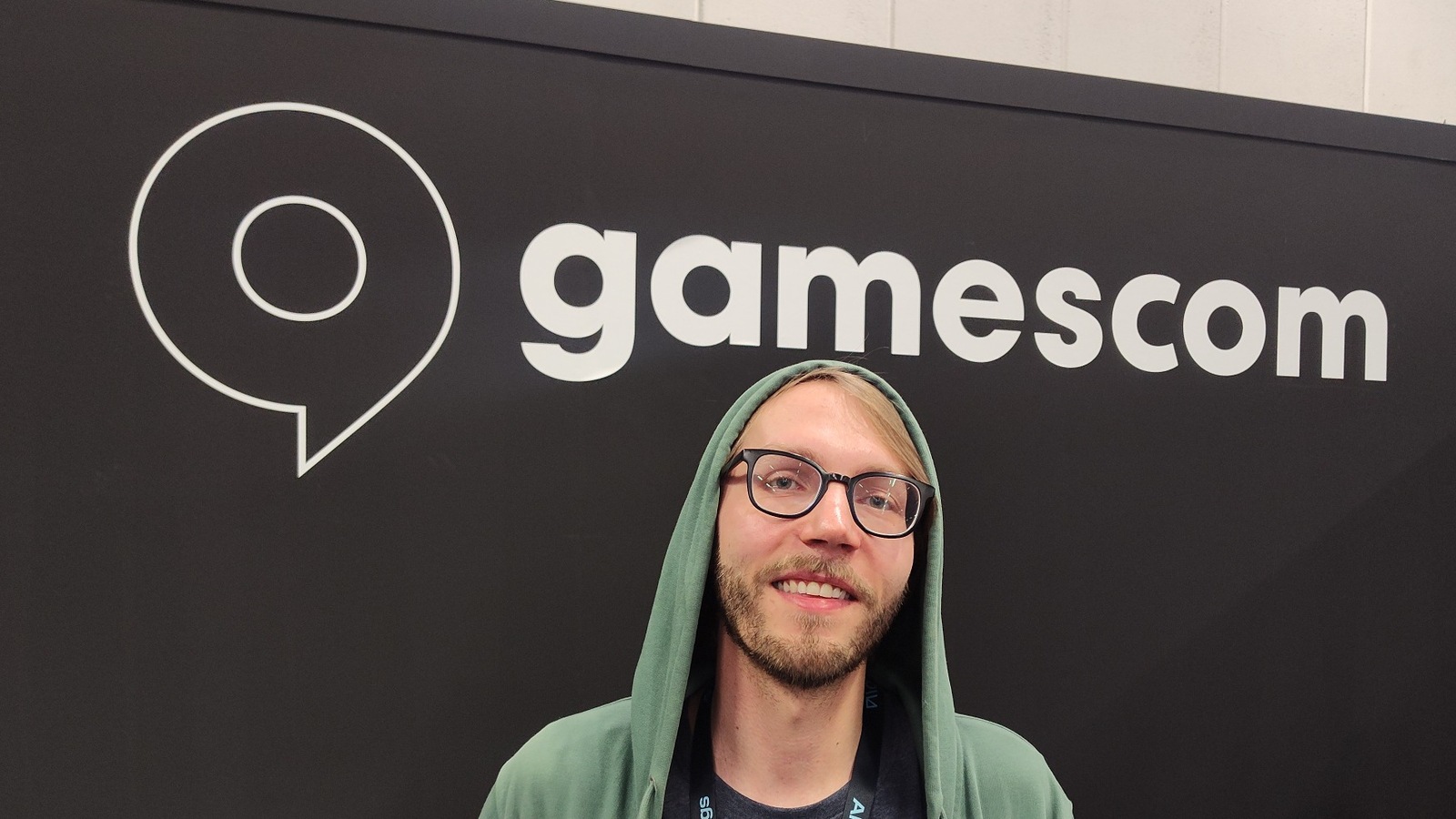
“Testing, testing,” Ruslana Kruchek says into my recorder. The little bar moves. “That’s what we want, right? That’s how audio works,” I say. She agrees. I joke that I’m already an expert. She lets this pass.
Kruchek is co-founder of VP Production, an audio agency working across games and audio branding. She spends a lot of her time with smaller developers, which means she knows the point in production where somebody has already built half a game, paid the artists and suddenly remembers that the finished object is also expected to make noises.
Her rule of thumb for a healthy audio budget is somewhere around ten to fifteen per cent of the whole production. What she often sees is closer to five. “Studios often forgot to put audio in the scope when they’re budgeting the game,” she says.
This has improved over the past five years. Developers contact her earlier now, occasionally while there is still enough money left to decide what the music should cost. “When a person tells me, ‘Hey, we’re thinking about making a game. Can I get a quote?’ I’m getting all excited.” I have rarely heard anybody describe receiving a request for a quote with this much affection.
The other version comes later:
Here is the money we have left. Can you make it work?
By then, the ambition can have survived the budgeting process rather better than the budget has. “Sometimes they think that they can get a Hans Zimmer-level soundtrack for like 50 bucks.”
Zimmer’s availability at that price was not discussed. Kruchek has become more sympathetic to the underlying problem, though. Six years ago, she says, a client cutting the audio budget would frustrate her. Working with indies has forced her to decide where compromise hurts and where nobody playing the finished game will notice.
Kruchek starts by separating the audio that carries the identity of the game from the stuff that simply has to work. A main theme needs to be its own thing; music that carries an important part of the game does too. “Those have to communicate the promise of the game,” she says. That is what she considers non-negotiable. Menu clicks are different. Interface sounds still have to be good, but a small studio can buy a library pack for ten to fifty dollars and save the money for the parts the player will actually feel.
That can mean spending fifty dollars on an interface-sound pack so there is still money left for the main theme. It can also mean not putting an audio specialist on payroll. A small studio may need a composer intensely for a stretch and then barely at all for months. Kruchek thinks outsourcing makes obvious sense there. Getting those sounds into the finished game is trickier. Once they are tied into the game’s systems, whoever is fixing them needs to be close enough to the programmers to find out why yesterday’s perfectly good menu click has suddenly disappeared.
On paper, this should be the point where VP Production benefits. Small studios need specialists but cannot afford to employ all of them permanently; Kruchek runs a company built to fill exactly that gap. She tells me she hasn’t worked on a game-audio project since the previous summer.
The explanation is painfully simple. One project slipped to next March. Other developers she expected to work with never secured funding, so the audio job vanished before anybody could commission it. Kruchek even offered to take a share of future revenue instead of being paid upfront on projects she liked. Some studios refused because they did not want to solve their cash problem by handing part of the risk to her. They wanted her work, couldn’t afford it, and felt bad asking her to bet on them instead.
“So for us, it’s been a tough time,” she says.
VP Production has another business. Audio branding currently pays better: the company creates the sonic identity businesses use to make themselves recognisable, much as a visual designer would build a brand’s look. “Audio branding basically is what is paying for my ticket here.”
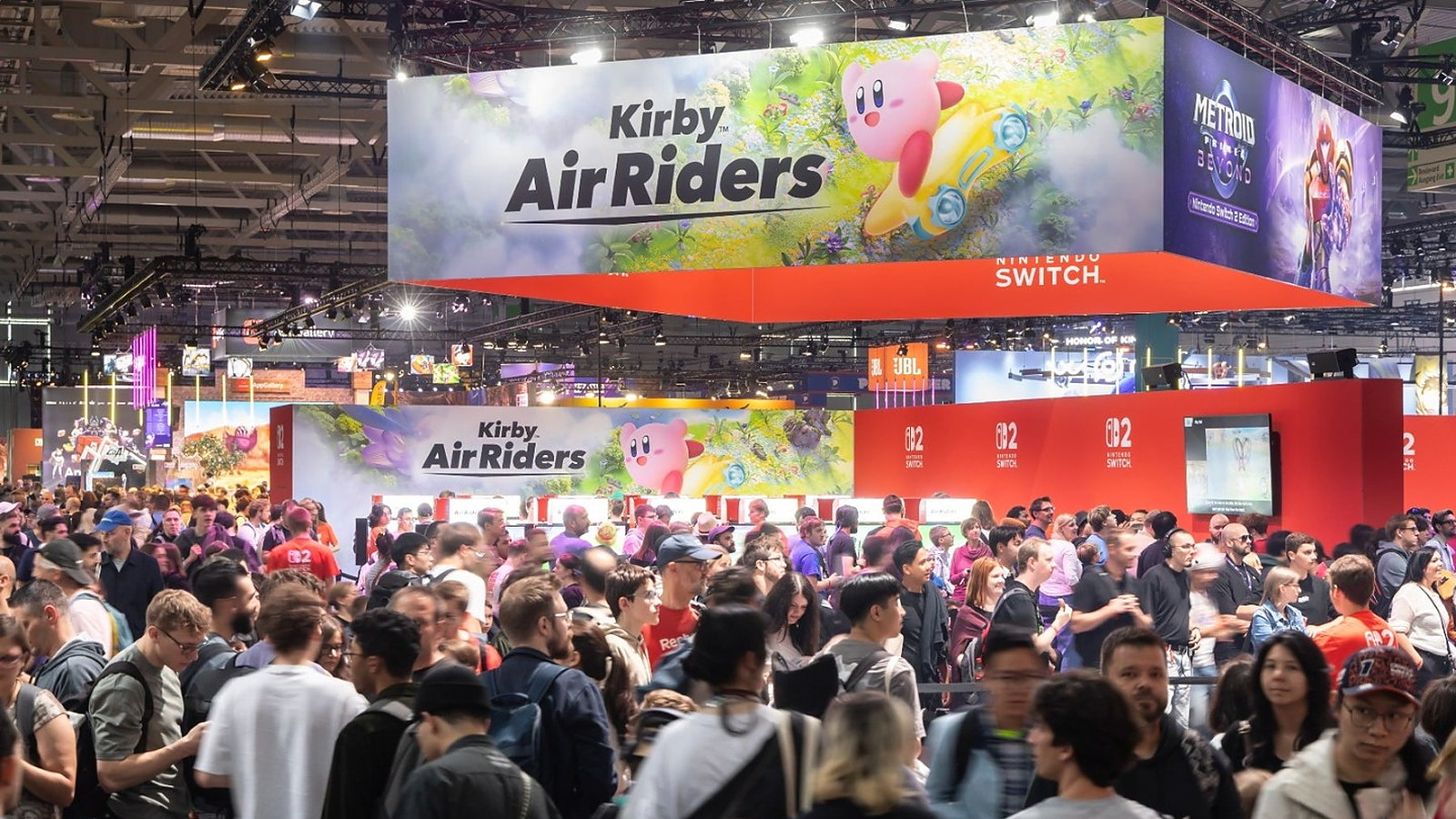
Corporate audio paid for her trip to Gamescom to find more videogame audio work. That is about as concise a description of the current indie economy as I heard all week.
Kruchek still wants the game work. She talks about the difference in emotional terms rather than pretending corporate clients are beneath her. Brand projects can be creatively demanding, but people live with game music differently. It becomes attached to places they explored, characters they cared about, stretches of life they happened to be passing through when they played.
Then I ask about AI, because apparently every Gamescom conversation in 2026 had to go there eventually. Kruchek likes some of it.
VP Production has trained an AI model to answer a simple question before a client spends money: does this piece of music make people feel what we think it does? A big brand can pay a test group to find out. A small studio often can’t.
Kruchek’s model tries to predict the answer instead. Soon she gets to see how good it is. One of the agency’s branding projects is going through a real audience test, and she’ll compare what people actually say with the model’s guess. “It would be nice if it were right,” she says. She expects it to be reasonably close. She mainly wants to know how close.
Her composer partner sometimes uses AI for a much simpler job. If he gets stuck on a music-theory question, he asks it for suggestions and decides whether any of them are useful. Kruchek calls it an adviser. Advisers are allowed to be wrong.
She can also imagine AI helping a small studio stretch its music budget. VP Production could create the main sound of the game, what she calls its “audio DNA”, and use AI to make additional music that follows it. If a studio can afford three original tracks but needs nine, that could fill some of the gap.
Current systems don’t tempt her much. She calls it “AI slop” and says she can hear it.
What surprises me is that she doesn’t see every use of AI music as lost work. A lot of tiny studios were never going to hire a composer; they were buying $20 library tracks. If AI replaces that, Kruchek says, VP Production hasn’t lost a job it was ever going to get.
“Those are people that would not order from me either way,” she says.
If a studio was going to hire a composer and uses AI instead, somebody lost a job. If it was going to buy a $20 library track, Kruchek was never in the running.
Voice acting worries her more. Some clients have asked if an actor could record a small batch of lines and then let AI take over the rest by copying their voice. Most actors she works with say no. VP Production’s contracts say those recordings cannot be used to train a model without permission.
Some actors do agree to it. Kruchek doesn’t judge them. “I do not judge them. Everybody adapts however they can to the reality we’re in now.”
I like that answer. She knows what she will allow in her own contracts without deciding what another actor should do with their voice.
We are discussing the general state of the games business when Kruchek suddenly looks past me. “Oh my God, there is a dog that carries a bag, and it has sunglasses on, oh my God.”
“The sunglasses are really the thing,” I say. I mention that I’m a dog person. Kruchek says she has a tattoo of her own dog. For a few seconds, funding conditions lose to canines. Then we return to independent videogame production, because the dog has places to be.
Gamescom has given her some better news too. A few developers found funding, though often less than they wanted. Others are still looking. Compared with two years ago, Kruchek thinks money is beginning to move again, slowly.
Kruchek describes the market shift as a “cleansing process”. In context, she is talking about the Covid-era rush of money into games and what happened when too many projects failed to earn it back. Investors are more careful now, and studios have to give them a stronger reason to bet on a game. She thinks some correction was inevitable.
Kruchek expects game work to come back. She just doesn’t know when.
Before we finish, I ask what games journalists keep missing about audio. Kruchek briefly wonders what Rockstar might be doing with music, then gives me a simpler assignment.
Write about soundtracks more often.
She means treating a soundtrack as something worth finding on its own. You might hear a piece of music first, get curious and then look up the game. “You like the soundtrack and you’re like, okay, let’s check it out to see how it works in the context.”
This had somehow not occurred to me as an editorial category, despite the number of games I can identify from four notes of music.
“Who doesn’t like the ‘Tetris’ theme?” I say, and immediately worry that I have dated myself by several decades. Kruchek rescues me in an unexpected way: her grandparents had the first PC in her family, one of the enormous old ones, and she played ‘Tetris’ on that.
Her grandparents’ computer is long gone. She still remembers the music.