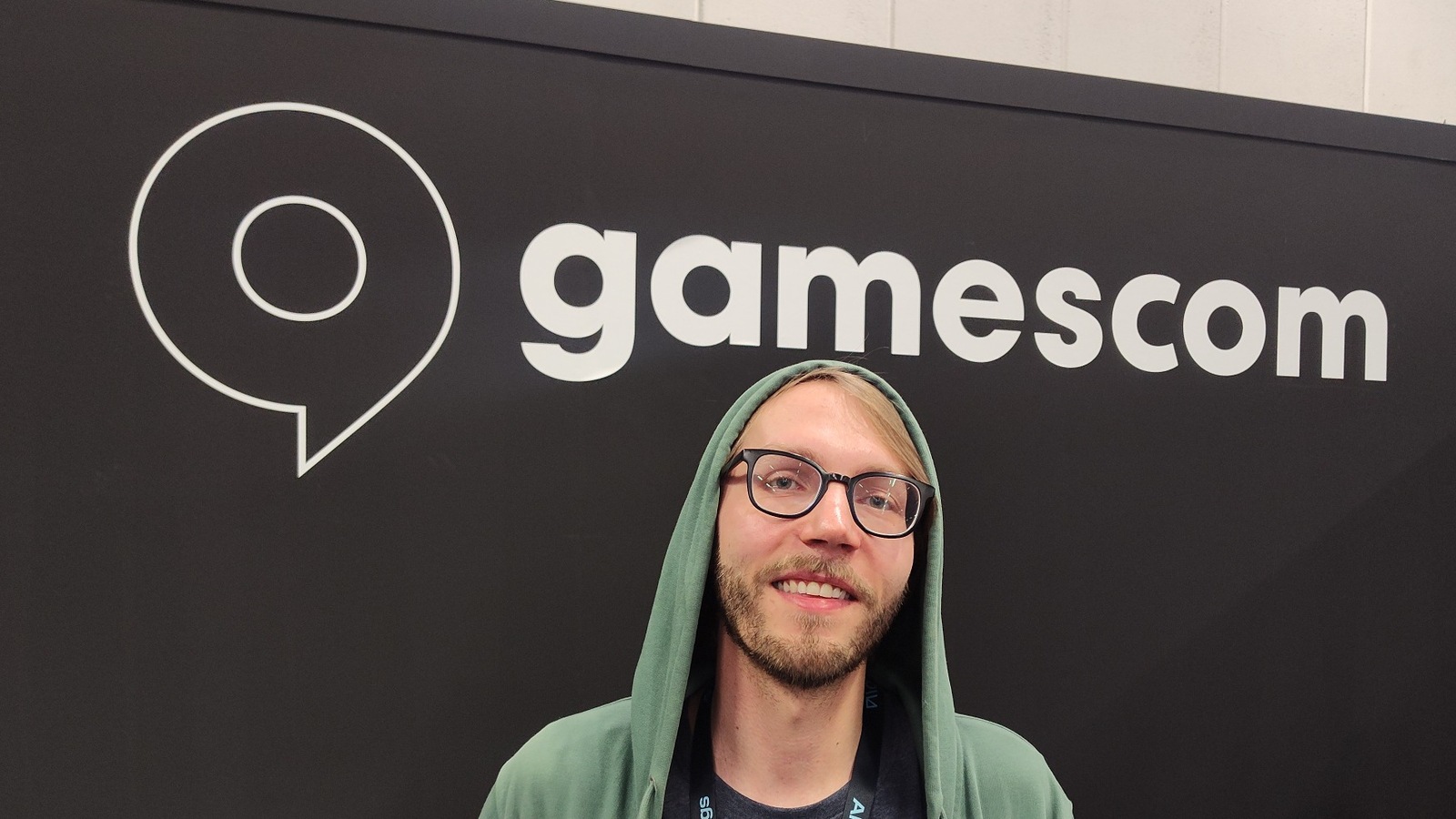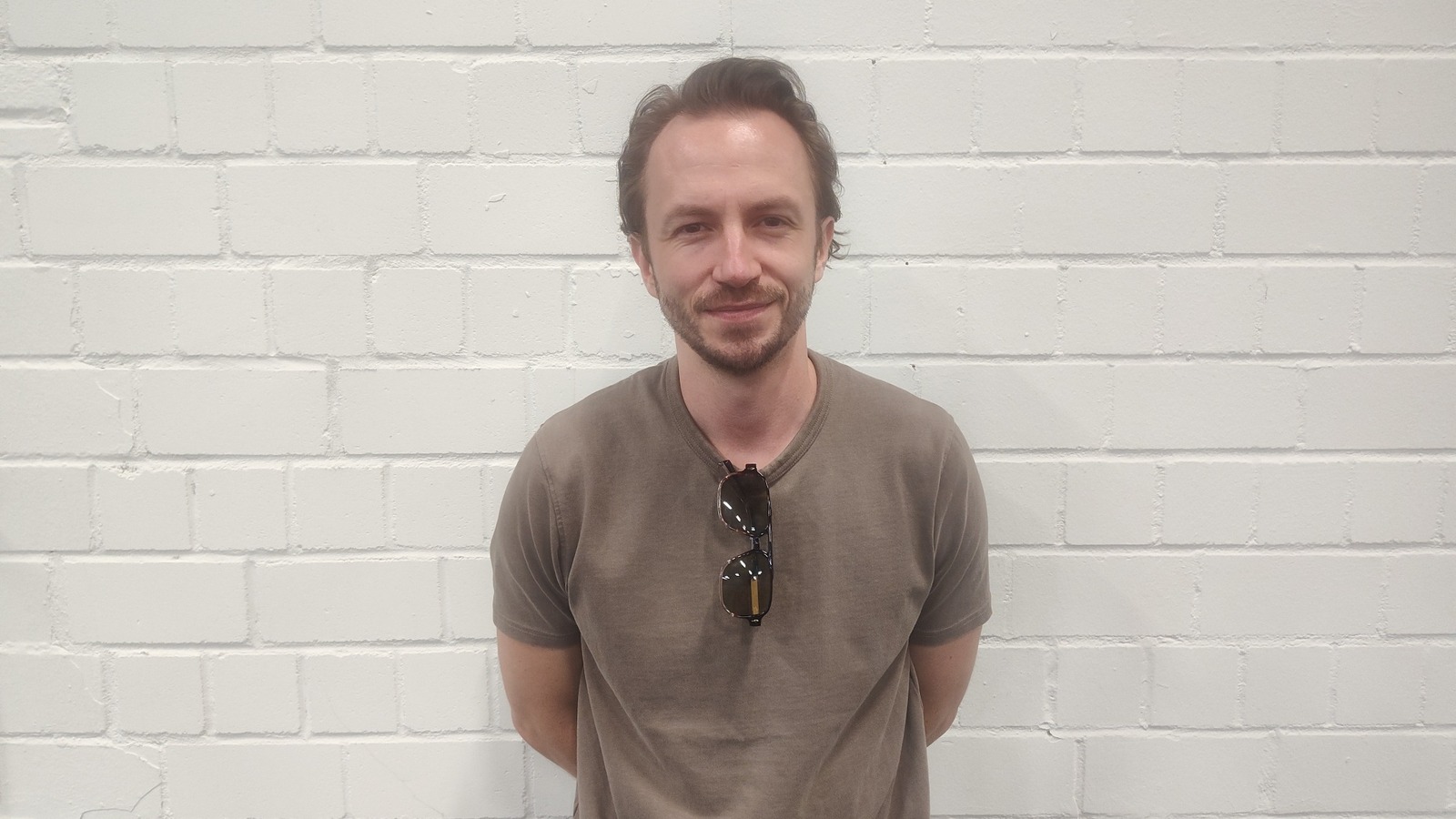
Alex Jordan is explaining how he played eleven versions of the same man when a trolley rolls past us at Gamescom. We stop talking and wait for it to leave.
The trolley is easier to keep track of than the cast.
In ‘The Alters’, Jan Dolski survives on a hostile planet by creating alternate versions of himself, each shaped by a life he might have lived. Jordan performs all of them. The writers gave each Jan his own vocabulary and rhythm; Jordan had to make those differences audible without turning the cast into eleven impressions of eleven different men.
He calls it the best acting challenge of his career so far. Jordan has worked on about 130 games, so the competition is not small.
One of the differences between the Jans comes down to a single word. The Scientist says “yes”. He does not say “yeah”.
“Yes feels quite clinical, it feels more formal,” Jordan says.
That suited him. The original Jan could be looser. As the characters spent more time together, Jordan would occasionally let their speech patterns rub off on one another.
Almost nobody playing ‘The Alters’ is going to stop and congratulate Jordan on his choice of “yes”. That is rather the point. Eleven versions of one man need to feel as though they have lived eleven different lives, and ideally the player never notices the actor doing the maths.
Jordan thinks voice acting still suffers from the assumption that the job consists mainly of arriving near a microphone and reading what is written down.
“A lot of people believe that it’s simply turn up, say words.”
On stage or television, an actor has a face and a body helping out. In a booth, Jordan says, nobody can see “the little glint in your eye” or “the furrow of your brow”. The voice has to do the work without making every emotion sound as though someone has just died.
Games make it stranger still. A script can arrive the night before a session, or when the actor gets there. Jordan says there may be only three reads of a scene. That leaves very little time to work out what the character wants, make a choice and then change it if the director asks for something else.
That is the work ‘The Alters’ needed from him.

When I ask whether AI has already changed the amount of work available to actors, Jordan does not talk about some theoretical future where the machines eventually come. He talks about adverts, and about television continuity: the voice telling you what is coming up next, or what you are watching now.
It is the sort of work most viewers hear without ever wondering who got paid to do it. Actors do. Jordan calls those jobs the bread and butter.
“These are things that put food on the table,” he says.
They fill the spaces between larger roles. More importantly, they help make it possible to remain an actor while waiting for those roles to arrive. Jordan says he is already hearing AI voices doing work in adverts and continuity that once went to performers.
It would be easy to dismiss this as the least glamorous end of acting. Nobody becomes an actor because they dream of announcing what programme starts at nine. Those jobs can be what lets somebody keep being an actor.
Game work can arrive with absurdly little warning. Jordan has been offered sessions for the next day and sometimes the same day. If you are paying the rent by working in a café, disappearing tomorrow for two hours of voice recording may not be an option. Particularly if getting fired from the café would solve the problem of your acting career by ending it.
Those smaller jobs can keep actors in the profession while they wait for the bigger ones. Jordan compares it to sport. Nobody expects elite athletes to materialise fully formed after removing the places where they trained.
“No one is a phenomenal actor from the moment they step in the booth,” he says. “It’s a combination of talent and learned craft.”
His question is what happens to the next Laura Bailey or Ben Starr if the work that keeps newer actors in the profession disappears before they ever get there.
“If you remove that ladder, we’re in a tricky, tricky place.”
Contracts are now part of the job too. Jordan says actors routinely push for protection against AI use and voice reuse, and what catches his attention is how a company responds when somebody asks.
Many will negotiate. A contract arrives written in the company’s favour, an actor or agent objects, and eventually everyone finds wording they can live with. Jordan becomes much more wary when the request for protection itself is treated as a problem.
I ask what a fair deal would look like if a studio genuinely wanted the right to use an actor’s voice digitally. Jordan says there is no single answer: different performers will draw the line in different places.
What matters to him is that performers understand what they are agreeing to, are paid properly and know what can happen to the recording afterwards.
Jordan also gets irritated by the way almost anything involving software can now acquire an AI sticker. As a performance director, he already uses tools that clean up audio, remove clicks and deal with background noise. That technology is useful. Some of it has existed for years.
Calling every clever piece of software “AI” because investors currently enjoy the word does not make it generative AI. Generating the performance is where the argument changes for him.
Jordan asks people to imagine a voice they would actually miss.
“A voice is a hugely, hugely personal thing,” he says.
He has tried asking people how they would feel if someone cloned their voice and used it to say whatever they wanted. Some people shrug at that. Then he asks them to imagine a different voice.
“What about if they made something of your mum, your dad, someone that read you stories when you were falling asleep?”
That normally gets a different reaction. A voice can belong to somebody you have known your whole life. It can be the thing you remember after they are gone. Once it can be copied, somebody who never knew them can make it say anything.
Jordan worries about services that allow people to upload another person’s voice and reproduce it without that person meaningfully taking part at all.
Then he gives me an example that is considerably less hypothetical.
Jordan says he knows a performer who used to record continuity announcements for a television channel. According to him, the performer lost the job when the company moved to AI. The performer believes their own voice is still being used.
Jordan does not name the performer or the company, so I cannot independently verify what happened.
But his reason for telling me the story is straightforward. AI and voice work are still often discussed as a fight about what studios might do in a few years. Jordan thinks that description is already late.
“It’s a problem here and now,” he says.